



Capsules linked to parks, accessible squares and viewpoints proposes a way to preserve family and community memories by connecting them with places that have been important in everyday life: the bench in a square where several generations met,...
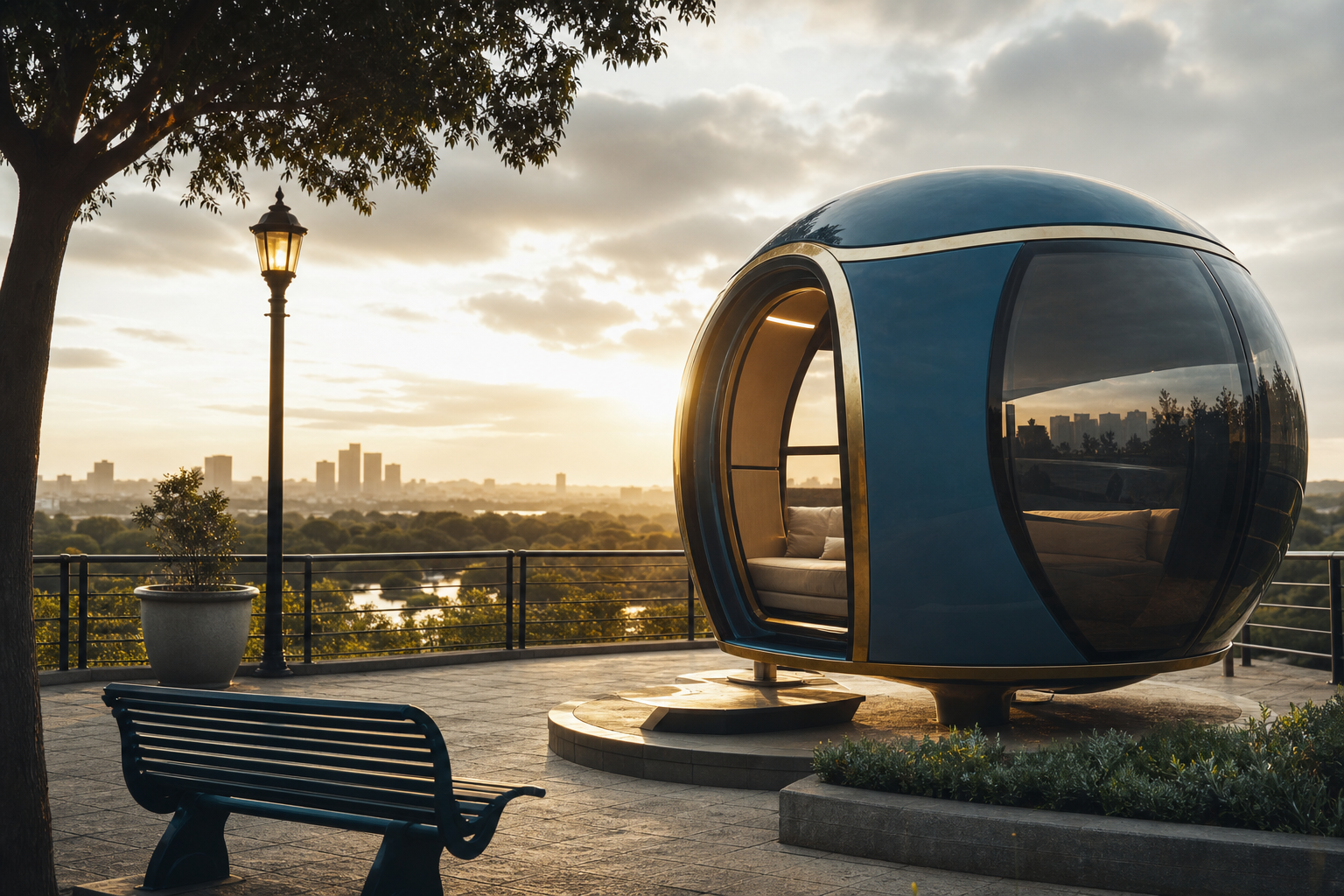
Capsules linked to parks, accessible squares and viewpoints It proposes a way to preserve family and community memories by connecting them with places that have been important in everyday life: the bench in a square where several generations met, a park adapted for barrier-free play, a walk with a view that became significant during a recovery, or a viewpoint from which someone learned to recognize their city.
A digital capsule linked to a place should not be reduced to a coordinate on a map. It can be a carefully curated set of photographs, Voice notes, Videos, documentos, descriptions and contextual data explaining what happened there, why that space matters and how it could be navigated at a specific moment. In the case of parks, accessible squares and viewpoints, memory gains an additional dimension: recording not only a personal experience, but also the conditions that made participating in it possible — or difficult.
This type of file requires sensitivity. Public spaces can contain intimate memories; images may show minors or people who do not wish to be identified; and information about accessibility can change with a work, a breakdown or a modification of urban furniture. A valuable capsule combines emotion, verifiable context and caution when sharing. The goal is not to create a definitive guide or promise accessibility that may no longer exist, but to leave a useful and respectful testimony for the future.
Una cápsula de memoria es una agrupación organizada de materiales digitales sobre una persona, una familia, una comunidad o una etapa vital. Cuando se vincula a un parque, a square or a viewpoint, incorporates a spatial reference: the name of the place, the municipality, the date of the visit and, if appropriate, an approximate location on a map. This connection makes it easier for those who inherit the file to understand where the events took place without relying solely on a decontextualized photograph.
The spatial link can be very simple. It is enough, For example, the official or popular name of the place, a general address and a brief description: 'square next to the market where grandma waited after school'. Adding exact coordinates can be useful for a specific viewpoint or trail, But it is not always advisable. If the content reveals routines, datos de salud, the regular presence of minors or sensitive information about a person, It's advisable to avoid unnecessary precision.
A capsule doesn't have to focus on a single day. It can gather memories from different visits over decades: the inauguration of a square, the first outings with a wheelchair, an afternoon of reading outdoors or rediscovering a park after a renovation. The value of the archive increases when it allows understanding the evolution of a relationship with the place.
It can also adopt a collective perspective. A neighborhood association, an educational center, an inclusive hiking group or a large family can document how they used a common space. In these cases it is especially important to differentiate personal memory from data presented as practical information. A story can say 'for us it was easy to get there'; a general statement like 'the access is suitable for everyone' requires more caution and a clear date.
Talking about accessibility is not only about mentioning a ramp. The experience of a park or a square can depend on the width of the pathways, the pavement, the slopes, the lighting, the availability of seating, the shade, the signage, the proximity of transport, the existence of restrooms, the noise levels or the possibility of being accompanied. Needs vary between people and also change within the same person over time.
For someone with reduced mobility, a brief slope can affect the entire visit. For a person with low vision, the contrast of elements can be decisive, the orientation or the continuity of the route. For a family with a stroller, an older person who needs frequent rests, someone sensitive to noise or who requires a predictable environment, other details matter. Accessibility is not a fixed label of the place: it is the relationship between a specific environment and specific needs.
This perspective enhances the documentary value of the capsule. Instead of just saying 'we went to the park', it can capture what allowed enjoyment of the visit: 'there were benches with backrests near the entrance', 'the ground was stable in the area we covered', “llegamos en taxi y evitamos la cuesta principal” o “la franja de primera hora resultó más tranquila”. Son datos humildes, fechados y situados, que pueden orientar a familiares sin convertir una vivencia en una garantía.
La memoria de las barreras también merece conservarse. Una escalera sin alternativa, una zona de juegos inaccesible, un camino erosionado o la ausencia de sombra pueden haber marcado una salida familiar. Documentarlo con respeto ayuda a entender decisiones pasadas y a reconocer la labor de quienes buscaron alternativas. Registrar una dificultad no es quejarse por sistema; es preservar las condiciones reales de una experiencia.
Los mejores lugares para una cápsula no son necesariamente los más conocidos ni los más fotogénicos. They can be everyday spaces: a small neighborhood square, a garden near a residence, a rest area next to a river or an open space from which you could watch the sunset. The choice should answer a simple question: what story does this place help to tell?
Repeated routes often contain a deep memory. The route from home to a park can explain a childhood, a change of neighborhood, a period of care or the recovery of autonomy. If documented, it is preferable to describe it generally and not publish usual schedules or exact routes of vulnerable people. A private capsule can include more detail than one intended for open dissemination.
Es útil anotar los nombres por los que la familia conocía el lugar. Muchas memorias se organizan alrededor de expresiones como “el parque de los patos”, “la plaza del reloj” o “el mirador de la curva”. Junto al nombre afectivo, puede añadirse el nombre actual o administrativo si se conoce. Así se mantiene el tono familiar y se facilita la identificación futura, incluso si cambian los usos del barrio.
Un banco bajo unos árboles, una zona de espera o un pequeño jardín pueden parecer escenarios secundarios, pero a menudo concentran momentos decisivos: conversaciones durante un tratamiento, descansos en una mudanza, encuentros entre generaciones o despedidas. No hace falta convertir cada lugar en un símbolo solemne. Sometimes a brief note is enough: 'Here we waited for the physiotherapy to finish and then we took a short walk'.
A well-described memory preserves both the extraordinary moment and the routine that supported it. That attention to the everyday prevents the family archive from being filled only with celebrations and helps convey how life was really lived.
Viewpoints invite photography, but their interest can go beyond the view. It can be documented who chose to go up, how they got there, what was seen that day, what conversation arose or why it was decided to return. If access involved a significant difficulty, it is advisable to narrate it without dramatizing or hiding it. Honesty serves more than a perfect image.
In natural settings, one should avoid sharing details that could promote the mass exposure of vulnerable points, entry to restricted areas or unsafe behaviors. A broad reference to the municipality or the main trail may be enough when the exact location does not add value to the legacy.
A solid capsule does not need to contain hundreds of files. It needs its elements to be understood among themselves and for an external person to be able to open them in a few years. Before adding materials, it is advisable to think about which question each one will answer: What happened?, Who participated?, Where it took place?, When?, What made the place special?, What access conditions were found?
These are materials that are usually useful:
La descripción escrita es el puente entre un archivo visual y una memoria comprensible. Una fotografía de un banco puede ser entrañable para quien estuvo allí, pero indescifrable para un nieto que la encuentre décadas después. Una frase como “en este banco el abuelo enseñó a Clara a nombrar los árboles” transforma el archivo.
La calidad técnica importa, aunque no debe paralizar el proyecto. s, conserva el archivo original de las fotografías y vídeos, además de cualquier versión editada para compartir. Evita depender únicamente de capturas de pantalla, enlaces a redes sociales o aplicaciones que podrían dejar de existir. Para textos y transcripciones, formatos sencillos y ampliamente utilizados suelen facilitar la consulta futura.
Si se añaden mapas o enlaces, conviene acompañarlos de una descripción textual. Los servicios cartográficos cambian, las direcciones web se rompen y los nombres de los lugares se modifican. Una nota independiente con el municipio, el nombre conocido en ese momento y la fecha seguirá siendo útil aunque falle el enlace.
La información práctica sobre accesibilidad requiere precisión y humildad. Un parque puede estar reformado hoy y presentar obras mañana; una plaza puede contar con un ascensor que esté temporalmente fuera de servicio; un sendero aparentemente transitable puede cambiar tras lluvia intensa o por falta de mantenimiento. Por eso es preferible describir observaciones concretas, fechadas y atribuidas a quien las vivió.
En lugar de escribir “mirador totalmente accesible”, resulta más responsable indicar: “en nuestra visita de abril, accedimos desde la entrada norte por un itinerario pavimentado; encontramos una pendiente que nos obligó a ir despacio y usamos acompañamiento”. Esta formulación no oculta la experiencia, pero deja claro su alcance limitado. Una observación personal fechada es más fiable que una etiqueta universal sin contexto.
No es necesario convertir cada salida en una inspección técnica. However, si el objetivo de la cápsula incluye orientar a familiares, puede anotarse aquello que tuvo un impacto real:
It should be avoided to infer characteristics that were not verified. If the restrooms were not entered, they should not be described as accessible; if only one area was visited, it is not appropriate to generalize to the entire park. Similarly, A positive experience of one person does not invalidate the difficulty another may encounter. Responsible documentation explains what was observed, not what is assumed.
When there is official information from the manager of the space, a copy or a link can be kept as a reference, indicating the date of consultation. Aun así, that information does not replace the experience nor guarantees that conditions will remain the same. Separating 'published information' from 'our experience' improves the clarity of the capsule.
Parks and squares are public spaces, but that does not mean that everything captured in them should be kept or shared without reflection. In a family photograph, unrelated people may appear, license plates, nearby homes, menores o señales que revelen una ubicación precisa. Antes de subir o compartir materiales, conviene revisar qué datos quedan expuestos.
El consentimiento es especialmente importante cuando la cápsula reúne testimonios de varias personas. Una entrevista grabada puede incluir recuerdos íntimos, datos de salud, conflictos familiares o información que el participante desea reservar. Lo más prudente es explicar para qué se guardará el material, quién podrá verlo, si se compartirá fuera de la familia y si la persona puede pedir cambios o retirada antes de su publicación.
Que un recuerdo sea importante para quien lo conserva no elimina el derecho de otras personas a decidir sobre su exposición. Esta regla es válida incluso en entornos familiares, donde la confianza puede llevar a compartir de más.
No todo debe tener el mismo grado de visibilidad. Una forma práctica de organizar el archivo es clasificar los materiales en varios niveles: privado para la persona creadora; familiar para un grupo definido; compartible con personas invitadas; y público, si realmente existe una razón para difundirlo. La clasificación puede revisarse con el tiempo. Lo que hoy parece adecuado para una comunidad pequeña quizá no deba circular abiertamente dentro de diez años.
Para contenidos relacionados con menores, rutinas de cuidado o ubicaciones frecuentes, es aconsejable aplicar el nivel más restrictivo por defecto. Si se desean compartir fotos de un espacio, puede ser preferible seleccionar imágenes sin rostros identificables, blur details or use wide shots. These decisions do not detract from the authenticity of the legacy; they protect it.
It is also convenient to think about future privacy. Someone may feel comfortable sharing a mobility limitation today and not want that information to be available for descendants, friends or third parties without a time limit. En esos casos, a note can establish a future review, an opening date or a deletion instruction.
Accessibility should appear as part of the story, not as the only identity of those involved. A capsule can explain that a route was chosen for its gentler slope and, at the same time, record the joke that was told along the way, the hobby of birdwatching or the tradition of bringing a snack. El relato gana humanidad cuando no presenta a una persona únicamente a través de una dificultad, un diagnóstico o una ayuda técnica.
Conviene usar las palabras que cada persona prefiera para describirse y evitar expresiones condescendientes. Si no se sabe cómo nombrar una situación, puede preguntarse directamente o utilizar una formulación neutra y concreta. For example, “necesitaba hacer descansos frecuentes” suele informar mejor que una etiqueta vaga o valorativa.
La accesibilidad se documenta mejor cuando se escucha a quienes experimentan el espacio en primera persona. En una cápsula familiar, esto puede traducirse en una pregunta sencilla: “¿Qué te ayudó a disfrutar de este sitio y qué cambiarías?” La respuesta, grabada o escrita, It can be more revealing than any list of features.
It is important not to turn a difficult output into a mandatory story of overcoming. Sometimes the memory will be joyful; other times, frustrating or ambivalent. Both possibilities take place in an honest archive. The purpose is not to create an exemplary story, but to preserve an experience with its nuances.
A digital archive becomes fragile when it depends on a single person remembering where they stored each item. Organization does not require complex tools, but it does require some consistency. A folder structure by place, year, or project allows materials to be retrieved quickly. Within each folder, A context document can explain what the collection contains and who prepared it.
Los nombres de archivo deben ser legibles sin abrirlos. En vez de “IMG_4928.jpg”, puede utilizarse una fórmula como “2024-05-18_Plaza-del-Mercado_merienda-familiar_01.jpg”. Si la fecha no es exacta, es preferible indicarlo de forma honesta: “1987-aprox_Parque-del-Rio_paseo-con-abuela.jpg”. No conviene inventar precisión solo para que el archivo parezca más ordenado.
Los metadatos son datos que acompañan al archivo: fecha, autoría, descripción, place, personas retratadas o derechos de uso. No todos deben rellenarse siempre, pero una descripción básica resulta muy valiosa. Un sistema sencillo mantenido durante años es mejor que una catalogación perfecta abandonada a mitad de camino.
Para las fotografías importantes, puede añadirse una ficha breve con los siguientes campos:
Cuando el lugar cambie de nombre o sea transformado, no es necesario reemplazar la información antigua. Es preferible conservar la denominación histórica y añadir una nota actualizadora. Así se evita borrar el contexto de la época y se deja constancia de la evolución urbana o paisajística.
La conservación no termina al crear la cápsula. Devices fail, Passwords are forgotten, file formats go out of use and online services may change their terms. Therefore, a memory linked to a place requires a preservation plan appropriate to its importance and sensitivity.
As a general principle, it is reasonable to keep more than one copy of important materials and not concentrate them all on the same device or location. A local copy allows everyday access; another, stored in a different location or in a consciously chosen storage service, reduces the risk of accidental loss. If online storage is used, it is advisable to review account recovery options, authorized person access and privacy conditions.
La copia que nunca se comprueba no es una estrategia de conservación, sino una esperanza. Una revisión periódica permite abrir una muestra de archivos, verificar que los vídeos y audios se reproducen, actualizar soportes envejecidos y corregir errores de organización. No hace falta hacerlo cada semana: lo importante es establecer una rutina realista y documentarla.
Las versiones originales deben conservarse cuando sea posible. Una foto editada para redes o un vídeo comprimido para mensajería pueden ser útiles para compartir, pero no sustituyen al archivo de mayor calidad. Similarly, las transcripciones de audio y los textos descriptivos deben mantenerse junto a los archivos audiovisuales, no solo en una aplicación aislada.
Una cápsula de legado debe poder ser comprendida por alguien que no participó en su creación. Deja instrucciones sencillas: dónde están las copias, qué cuentas o dispositivos intervienen, quién tiene autorización para acceder y qué desea la persona creadora que ocurra con los contenidos privados. Estas indicaciones deben guardarse de forma segura y actualizarse cuando cambien las circunstancias.
También conviene designar, si se desea, a una persona de confianza que conozca la existencia del archivo. No tiene que asumir una carga técnica compleja; puede limitarse a saber dónde encontrar las instrucciones. El legado digital necesita destinatarios informados, no solo archivos bien guardados.
Las decisiones de conservación incluyen el derecho a no preservar. Puede haber imágenes repetidas, testimonies that are too intimate or location data not worth keeping. Review, deliberately selecting and deleting does not necessarily impoverish memory: it can make it clearer and more respectful.
starting with a single place prevents the project from becoming unmanageable. choose a park, square or viewpoint with meaning, gather a few materials and complete a basic form. after that first experience, it will be easier to decide which fields are unnecessary, what information is missing and what level of detail fits the family or group.
Un ejemplo prudente podría ser una cápsula sobre una plaza donde una familia celebraba las tardes de verano. Contendría tres fotografías seleccionadas, una nota de voz de una tía describiendo las conversaciones, a drawing of a child with their family's authorization and a card indicating: Visited regularly between 2015 and 2019. In the area we used there was shade at the end of the afternoon and nearby benches. This observation does not describe the entire square or its current conditions.
Another example would be a viewpoint related to a person who regained the habit of going out after a period of illness. The segment could prioritize a first-person narrative about the meaning of seeing the landscape again, without exposing clinical details that are not necessary. If the itinerary is included, it would be enough to explain that it was done with support and breaks, avoiding presenting that option as suitable for everyone.
One of the most common mistakes is saving many images without description. Abundance can give a sense of security, but it does not guarantee future understanding. Selecting and contextualizing is usually more useful than accumulating. Another mistake is relying on just one platform, a mobile phone, or a personal account. The initial convenience can become a problem if the device changes or access is lost.
It is also common to confuse inclusive intention with accuracy. It is positive to want to recommend a place, but calling a space 'accessible' based on a partial visit can be misleading. The alternative is to describe the experience without extrapolating. La prudencia en la información práctica protege tanto a quien consulta como a quien documenta.
En el plano familiar, conviene evitar publicar de inmediato todo lo que se recoge. La emoción de una excursión o de un encuentro puede llevar a compartir imágenes que, con distancia, resultan demasiado reveladoras. Reservar un tiempo de revisión reduce este riesgo. Si hay dudas sobre un material, el criterio más seguro suele ser limitar su acceso hasta hablar con las personas implicadas.
Last, no hay que esperar a tener una solución técnica perfecta. Una cápsula inicial hecha con una carpeta ordenada, buenos nombres de archivo, descripciones claras y copias revisadas puede ser mucho más resistente que un proyecto ambicioso que nunca se termina.
Los parques, las plazas y los miradores forman parte de la biografía de muchas personas porque ofrecen encuentro, descanso, juego, orientación y contemplación. Vincular una cápsula de memoria a estos espacios permite conservar algo más que una localización: preserva las relaciones, los apoyos, las barreras y las decisiones que dieron forma a cada visita.
Una cápsula accesible no habla solo de cómo era un lugar, sino de cómo las personas pudieron habitarlo juntas. Para comenzar, elige esta semana un espacio significativo, selecciona cinco archivos, escribe un recuerdo de unas pocas líneas y añade una observación fechada sobre aquello que facilitó o dificultó la experiencia. Después, revisa la privacidad, Keep an additional copy and leave a note for whoever may care for that legacy in the future.
That small gesture can become a lasting memory: one that does not idealize places or erase differences, but rather conveys honestly how a family or a community found —sometimes easily and sometimes with effort— their way of being in the world.
Log in or create your account without leaving this page.
WordPress administration remains available separately for authorized users.