



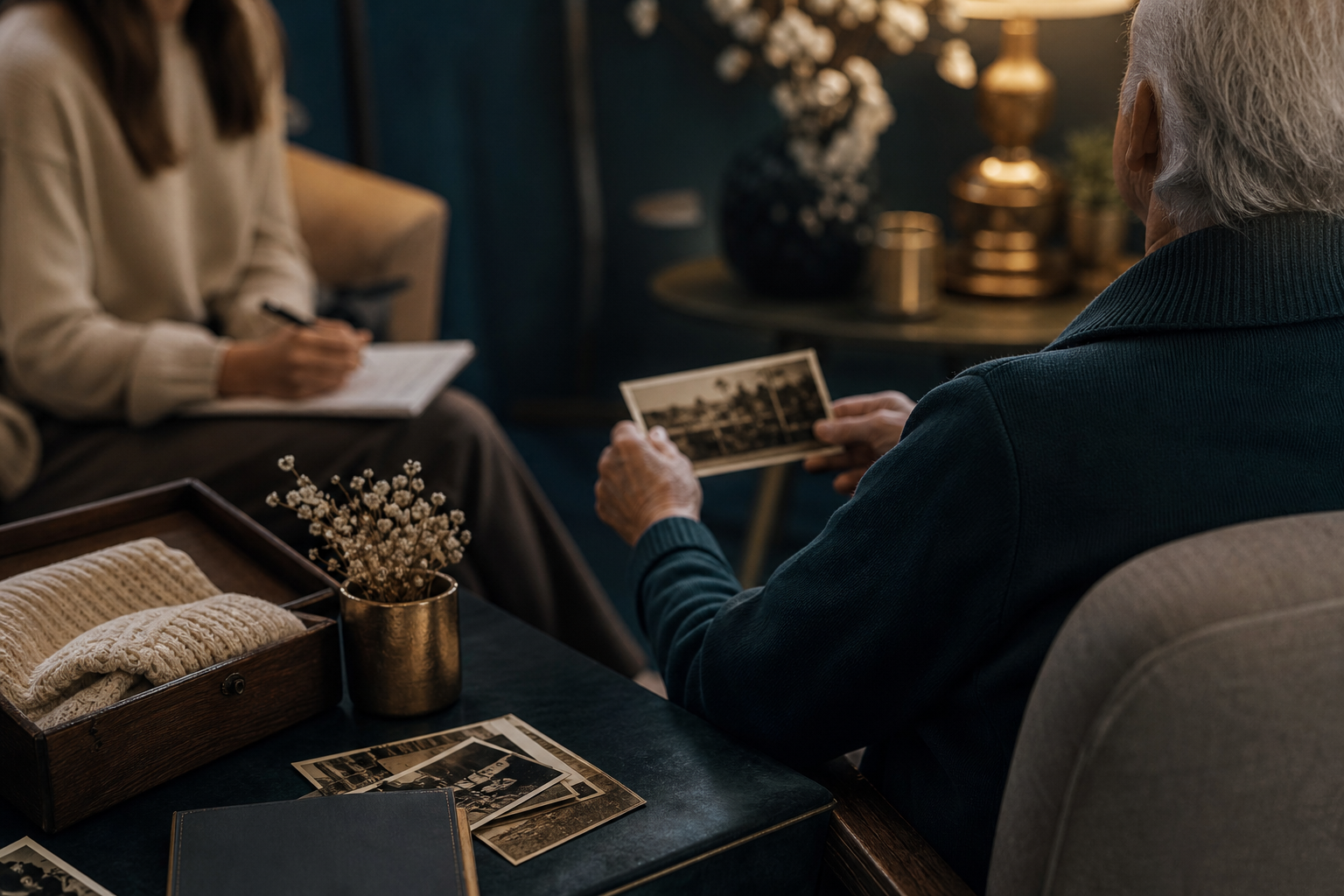
How to interview grandparents and older people to preserve their memory
Interviewing a grandfather, A grandmother or any older family member is a way of taking care of a heritage that does not fit in a box: recuerdos, expressions, decisions, recipes, migrations, trades, connections and ways of understanding the world. A good interview does not consist of extracting data or obtaining a perfect chronology. It consists of creating the conditions for the person to be able to tell what they consider important, at their own pace and with dignity.
In addition to preserving family stories, these conversations can help identify photographs, organize documents, clarify family relationships and record everyday knowledge that rarely appears in official archives. However, they can also awaken sadness, conflicts or painful memories. That is why it is advisable to combine curiosity with preparation, listening and respect for privacy.
The priority is not to get an excellent recording, but that the person being interviewed feels safe, heard and in control of their story. This guide proposes a practical method to prepare, conduct, store and share family memory interviews without turning the encounter into an interrogation.
1. Define the purpose of the interview
Antes de preparar preguntas o encender una grabadora, merece la pena aclarar el propósito. No es lo mismo entrevistar a una persona para elaborar un álbum familiar, para recoger recetas tradicionales, para comprender una migración, para documentar la historia de un negocio o para que hijos y nietos escuchen su voz en el futuro. El objetivo orienta el tipo de conversación, la duración, las personas que participarán y el uso que se dará al material.
Un propósito concreto evita dos problemas frecuentes: querer preguntarlo todo en una sola tarde y guardar archivos que después nadie sabe cómo revisar. Puede bastar con una pregunta central, como “¿Qué te gustaría que la familia entendiera de tu infancia?” o “¿Qué recuerdos de tu madre no quieres que se pierdan?”. From there, se pueden organizar varias sesiones breves.
Una entrevista de memoria familiar funciona mejor cuando tiene un objetivo flexible y una duración asumible. Flexibility matters because memories do not always appear in order. A photograph can lead to talking about a wedding, a song can awaken a work story and a recipe can open a conversation about scarcity, care or celebration.
Choose an initial approach
These approaches can be combined, but it is advisable to choose one as a starting point:
- Life story: childhood, school, trabajo, friendships, partner, family and life changes.
- A specific period: a move, military service, a work stage, moving to a neighborhood or the birth of a child.
- Memory of objects: photos, cartas, clothing, tools, medals, cookbooks or documents.
- Knowledge and customs: cooking, cultivation, trades, celebraciones, songs, family remedies or local expressions.
- Legacy message: advice, values, lessons, thanks and wishes for future generations.
It is not necessary to decide that the result will be public. In fact, The safest option is to start by assuming that the content will be private, unless the interviewee clearly indicates otherwise.
2. Ask for permission and talk about privacy before starting
The conversation must be voluntary. Even if there is a trusting relationship, it is advisable to explain in simple words what you want to do, why, if audio or video will be recorded, who will be able to hear it and where it will be stored. It is not enough for the person to 'not object'; it is recommended that they express that they understand and agree to participate.
A clear phrase could be: ‘I would like to record this conversation to preserve your memories in the family. We can stop whenever you want, repeat an answer or leave out any topic. Before sharing it with anyone, I will ask you’. This explanation returns control to the person and reduces later misunderstandings.
Consent must be understandable, specific and reversible: one can change their mind even after the interview. If the person prefers not to be recorded, notes can be taken. If they accept audio but not video, that decision must be respected. If they want to talk about something but ask that it not be shared while they are alive, note it visibly next to the file.
Decisions that should be agreed upon
Before the interview, ask calmly if there are preferences regarding these matters:
- If audio will be recorded, vídeo, photographs of the meeting or just notes.
- Which people will have access to the content: the interviewer, specific family members or the whole family.
- If full names can be mentioned, addresses, delicate dates or financial matters.
- If responses can be transcribed, edited or summarized.
- Si algunas partes deben mantenerse privadas durante un tiempo o eliminarse por completo.
- Quién podrá gestionar los archivos si la persona entrevistada ya no puede hacerlo.
No todas las familias necesitan un documento formal, pero sí necesitan acuerdos claros. Cuando haya asuntos especialmente sensibles, inheritances, conflicts, datos de salud, adoptions, violencia o información sobre terceras personas, puede ser conveniente dejar por escrito las restricciones de acceso. Si existen dudas sobre obligaciones legales aplicables, es sensato solicitar orientación profesional antes de publicar o distribuir el material.
3. Prepare the meeting without turning it into an exam
Una entrevista cálida empieza antes de sentarse a hablar. Elegid un momento en el que la persona esté normalmente descansada y un lugar conocido, silencioso y cómodo. Evitad programarla con prisa, immediately after a medical appointment, during a noisy family meal or on a date that may be emotionally difficult.
Physical comfort directly influences the quality of the conversation. It is advisable to check the light, the temperature, the posture, access to water, necessary pauses and any hearing or visual aid the person uses. If someone with hearing difficulties participates, speak face to face, articulate naturally and do not ask questions while looking at a screen or rifling through papers.
Properly preparing the environment communicates that the time and voice of the elderly person matter. A forty-minute session that ends wanting to continue is preferable to a long conversation that leaves fatigue or a sense of obligation.
Discreet prior research
Gather some basic information before asking questions: names of family members, towns where they lived, possible jobs, approximate dates and objects you might have on hand. It's not about checking if they 'remember correctly', but about asking more open-ended questions and detecting possible confusions without embarrassing anyone.
It also helps to bring only a few stimuli prepared: three photographs, a letter, a simple map or a song associated with a period. Too many objects at once can scatter the conversation. If photos or documents are going to be digitized, explain that they will first be talked about and then, if the person agrees, they will be calmly copied.
4. Design questions that invite remembering
The best questions don't look for exact answers, but scenes, people, sensations and meanings. En lugar de preguntar “¿En qué año os mudasteis?”, puede ser más útil decir “¿Cómo recuerdas el día de la mudanza?” o “¿Qué fue lo primero que notaste al llegar al nuevo barrio?”. Las fechas pueden aparecer después, y si no aparecen no invalida el relato.
Las preguntas abiertas suelen empezar por “cómo”, “qué”, “quién”, “dónde” o “cuéntame”. Las preguntas cerradas son útiles para confirmar un detalle, pero usadas en exceso hacen que la entrevista parezca un cuestionario. También conviene evitar preguntas que contengan una respuesta esperada, como “¿Verdad que aquello fue muy duro?”. Es mejor preguntar “¿Cómo fue aquello para ti?”.
Asking about specific experiences usually generates richer memories than asking for general opinions. A scene allows talking about smells, sounds, gestures, clothes, commutes and emotions; those details are what give life to the family archive.
Useful initial questions
- What is one of your first memories?
- What was the house you grew up in like?
- What could be heard from the window or in the street?
- Who took care of you and what did they do with you?
- What game, song or food immediately takes you back to your childhood?
- What was a normal day like when you started working or studying?
- Which people had an important influence on your life?
- What decision changed you more than you expected?
- Which custom from your time would you like to be better understood?
- ¿Qué te gustaría que recordaran de ti quienes vengan después?
Follow-up questions
Cuando surja una historia valiosa, no cambiéis de tema demasiado rápido. Frases breves como “¿Qué pasó después?”, “¿Cómo lo viviste tú?”, “¿Recuerdas quién estaba allí?” o “¿Qué te hizo sentir eso?” ayudan a profundizar sin dirigir la respuesta. Un silencio tranquilo también puede ser una invitación. Muchas personas necesitan unos segundos para ordenar lo que quieren contar.
No hace falta rellenar cada silencio: escuchar con paciencia es parte de la entrevista. Si la persona no recuerda algo, aceptadlo sin insistir. “No pasa nada, 'We can talk about something else' protects their confidence and allows the conversation to remain pleasant.
5. Conducir la conversación con escucha, respeto y ritmo
An interview is not a performance by the one asking questions. The interviewer should intervene just enough to maintain the flow, but without taking center stage. Look attentively, nod, pick up a meaningful word and ask for clarifications gently are gestures more effective than an extensive list of questions.
It is common for stories to mix time periods or include different versions of the same family story. Personal memory is not a database: it organizes experience through emotions, relationships and meanings. If you need to verify a fact for a family tree or an archive, hacedlo después y diferenciad siempre el recuerdo de la comprobación documental.
La memoria puede ser imprecisa en los detalles y, aun así, profundamente valiosa como testimonio personal. Corregir de inmediato, discutir una fecha o contradecir a la persona con tono de examen puede cortar una narración importante. Una alternativa amable es decir: “Tengo apuntado que quizá fue un poco antes; ¿te parece que lo revisemos otro día con las fotos?”.
Cómo manejar emociones y temas difíciles
Las entrevistas pueden tocar pérdidas, poverty, illness, discrimination, conflictos familiares, experiencias de violencia o decisiones de las que la persona se arrepiente. No hay obligación de abordar estos temas por considerarlos “históricos” o relevantes. Preguntad permiso antes de profundizar: “¿Te apetece hablar de esa etapa o prefieres dejarla para otro día?”.
Si aparecen lágrimas, enfado o bloqueo, detened el ritmo. Podéis ofrecer agua, proponer una pausa, cambiar a un tema más ligero o terminar. Evitad interpretar emociones, pedir detalles morbosos o prometer confidencialidad que luego no podáis cumplir. Si la conversación revela malestar intenso o una situación actual de riesgo, la prioridad deja de ser la entrevista y pasa a ser el bienestar de la persona.
Una historia dolorosa solo debe permanecer en la grabación si la persona desea realmente dejarla registrada. Tras un pasaje delicado, conviene preguntar de nuevo si quiere conservarlo, restringirlo o borrarlo. Esta segunda comprobación es especialmente importante cuando la emoción del momento puede haber reducido la capacidad de decidir con tranquilidad.
6. Grabar audio o vídeo con sencillez y cuidado
It is not necessary to have complex equipment to record a useful interview. A phone with available storage, a well-known recording app, and a quiet place can be enough. Before starting, Do a short test and listen to the result with headphones if possible. Check that the voices are understandable, that there is no TV in the background and that the device will not receive calls or notifications during the session.
For audio, place the phone or recorder close to the person, without forcing them to speak loudly. For video, prioritize a stable framing and sound over a spectacular image. If there are several people, it is better that they speak one at a time and say their name when speaking. Do not record family members present without notifying them.
Un sonido claro y una identificación básica del archivo son más útiles a largo plazo que una producción sofisticada. Al principio de la grabación podéis registrar, con permiso, el nombre de la persona entrevistada, la fecha aproximada, el lugar y los nombres de quienes participan. No hace falta enunciar datos que la persona no quiera incluir.
Pequeñas precauciones técnicas
- Cargad los dispositivos y llevad, si es posible, una batería externa.
- Activad el modo silencio o modo avión si no afecta a la grabación.
- Dejad espacio libre suficiente antes de iniciar una sesión de vídeo.
- Guardad una copia inicial al terminar, sin esperar varios días.
- Do not edit or cut the only original file.
- Note any access restrictions next to the file name.
If the person feels uncomfortable in front of a camera, do not try to convince them. Sometimes audio allows for a much more natural conversation. It may also be preferable to interview while looking at an album, walking slowly through a room or engaging in a daily activity, as long as the recording does not interfere with their comfort.
7. Usar fotografías, documentos y objetos sin perder el foco
Objects are excellent memory triggers. An old photograph can bring back names, relationships, places, and anecdotes that would not arise from a general question. A work tool can explain a profession; a notebook can show a way to organize the house; una carta puede abrir una historia de afecto, distancia o migración.
However, no todos los objetos deben manipularse ni digitalizarse de inmediato. Algunos documentos pueden contener información financiera, sanitaria, legal o relativa a terceras personas. Otros pueden ser frágiles. Antes de fotografiar, escanear o compartir nada, preguntad quién es propietario del objeto, qué datos aparecen y si hay límites para su reproducción.
Identificar una fotografía no solo consiste en poner nombres: también importa recoger el contexto y la emoción que la acompañan. En vez de “¿Quién es?”, probad con “¿Qué estaba pasando ese día?”, “¿Cómo conocías a esta persona?” o “¿Por qué guardaste esta imagen?”. Si la fecha no se conoce, una aproximación honesta es mejor que una precisión inventada: 'probably during the decade of…' or 'before the move to…'.
Una ficha sencilla para cada objeto
You can create a note associated with each photograph, letter or relevant item with these fields:
- Brief description of the object.
- People, related places or events.
- Exact date, approximate or unknown.
- Story told by the interviewed person.
- Origin and owner, if known.
- Copying restrictions, Publication or access.
This information must clearly distinguish what is known from what is remembered or assumed. For example: 'According to Carmen,', 'this photograph could correspond to a summer party'; 'the date has not been verified'. That transparency prevents a familiar conjecture from ending up being taken as an assumed fact.
8. Transcribir, resumir y editar sin alterar la voz
A recording preserves tone, pauses and nuances; a transcription allows you to search for topics, read calmly and share excerpts without having to listen to hours of audio. Both can complement each other. It is not mandatory to transcribe word for word: for many families a chronological summary with timestamps is sufficient, names of topics and selected quotes.
If you use automatic transcription tools, review the result before considering it final. Proper names, accents, local expressions, and delicate voices can generate errors. Privacy should also be considered: before uploading a recording to any service, comprobáis qué condiciones de tratamiento de datos ofrece y si la persona entrevistada ha aceptado ese uso.
Editar para facilitar la comprensión no autoriza a cambiar el sentido de lo que una persona quiso expresar. Podéis eliminar largos silencios de una copia de escucha, añadir una nota que aclare un parentesco o dividir una entrevista en capítulos. No deberíais juntar frases separadas para hacer que parezcan una afirmación distinta, ni suavizar o dramatizar un testimonio sin indicarlo.
Diferenciar originales y versiones
Conservad el archivo original sin modificaciones y cread copias para editar, compartir o transcribir. Un sistema de nombres coherente reduce confusiones. For example, podéis incluir fecha, name, tema y tipo de archivo: “2024-05-18_Ana-Garcia_infancia_audio-original”. Si la fecha completa se considera sensible, emplead una referencia menos precisa y mantened los datos detallados en una nota privada.
Junto a cada entrevista, guardad un pequeño documento de contexto: quién preguntó, qué permiso se dio, qué temas se trataron, si hubo partes restringidas y qué cambios se hicieron en las versiones derivadas. El contexto es parte de la conservación: dentro de unos años nadie recordará por intuición qué significa cada archivo.
9. Conservar la memoria digital a largo plazo
Grabar una entrevista es solo el comienzo. Los archivos digitales pueden perderse por averías, borrados accidentales, cambios de dispositivo, cuentas cerradas, contraseñas olvidadas o decisiones familiares poco claras. La conservación no depende de un único lugar ni de una única persona.
A reasonable practice is to keep multiple copies in different locations and occasionally check that they can be opened. Puede haber una copia en un dispositivo físico controlado por la familia, otra en un espacio digital protegido y una tercera en manos de una persona de confianza, siempre respetando las restricciones acordadas. La elección concreta dependerá de la sensibilidad del material, de los conocimientos técnicos disponibles y de quién deba acceder a él.
Si una entrevista existe en una sola copia, está en riesgo; si se comparte sin control, también. La conservación exige equilibrar disponibilidad y privacidad. Un vídeo íntimo no debería circular por grupos familiares simplemente porque técnicamente sea fácil hacerlo. Similarly, An encrypted or locked file without access instructions can become an inaccessible legacy.
Organización y acceso futuro
Prepare a simple inventory of the interviews and digitized objects. Include the file name, a description, the location of the copies, the access conditions and the person responsible for reviewing them. It is not necessary for this inventory to contain all sensitive details; its function is to allow locating and understanding the material without exposing it unnecessarily.
It is also advisable to agree on what will happen if the person who safeguards the files passes away, loses the ability to manage them, or stops using the chosen technology. Designating a second trusted person and explaining where the instructions are can prevent irreparable losses. Un legado digital bien cuidado necesita tanto copias técnicas como responsables humanos identificables.
10. Compartir historias familiares de forma responsable
Una entrevista puede emocionar a hijos, nietos, distant friends and relatives. Sharing it can strengthen bonds, but it can also cause tension if different versions of a story appear, information about living people or content that someone considered private. Therefore, before sharing a fragment, check what was agreed and ask again if possible.
Not everything should be published on social media, sent via messaging or included in a family book. Sometimes the most appropriate way to share is private listening in a small gathering, a folder with limited access or a transcript from which personal data has been removed. If the interviewee has passed away, respect the instructions they left and act prudently regarding topics that may affect living people.
J. u, s, t, Medical information, passwords, datos económicos o relatos de terceras personas que no han dado permiso. b, e, c, a.
Crear un legado que se use
u. s, e, crear un álbum con pies de foto revisados por la persona protagonista o pedir a los más jóvenes que respondan a algunas de las mismas preguntas. Así se evita que las grabaciones queden olvidadas en una carpeta.
También es útil compartir el proceso, not just the outcome: explicar que una fecha es aproximada, que una historia fue contada desde una perspectiva personal o que un tema quedó fuera por deseo expreso de quien habló. Esa honestidad enseña a las generaciones futuras que cuidar la memoria implica escuchar con sensibilidad, no convertir a los familiares en personajes.
Conclusion: empezar con una conversación posible
Preservar la memoria de abuelos y mayores no requiere una producción perfecta ni una lista interminable de preguntas. Requiere tiempo, attention and the decision not to take for granted the stories that can still be told. A well-conducted interview leaves room for laughter, pauses, contradictions and also limits.
As a first step, choose a person, suggest a brief conversation and clearly explain what you want to preserve. Prepare five open-ended questions, agree if there will be recording and reserve a quiet moment. Upon finishing, save the file with an understandable name, note any restrictions and make a backup.
The best interview is the one that protects the person today and allows their voice to be understood tomorrow. Start with a simple session; if the experience is good, there will be time to return, ask more and build a carefully maintained family archive, útil y verdaderamente compartido.