



Preparing a capsule for retirement is a way to pause before a major change and decide what deserves to be remembered, shared or protected. It doesn't have to be a literal box or a complex digital file:...
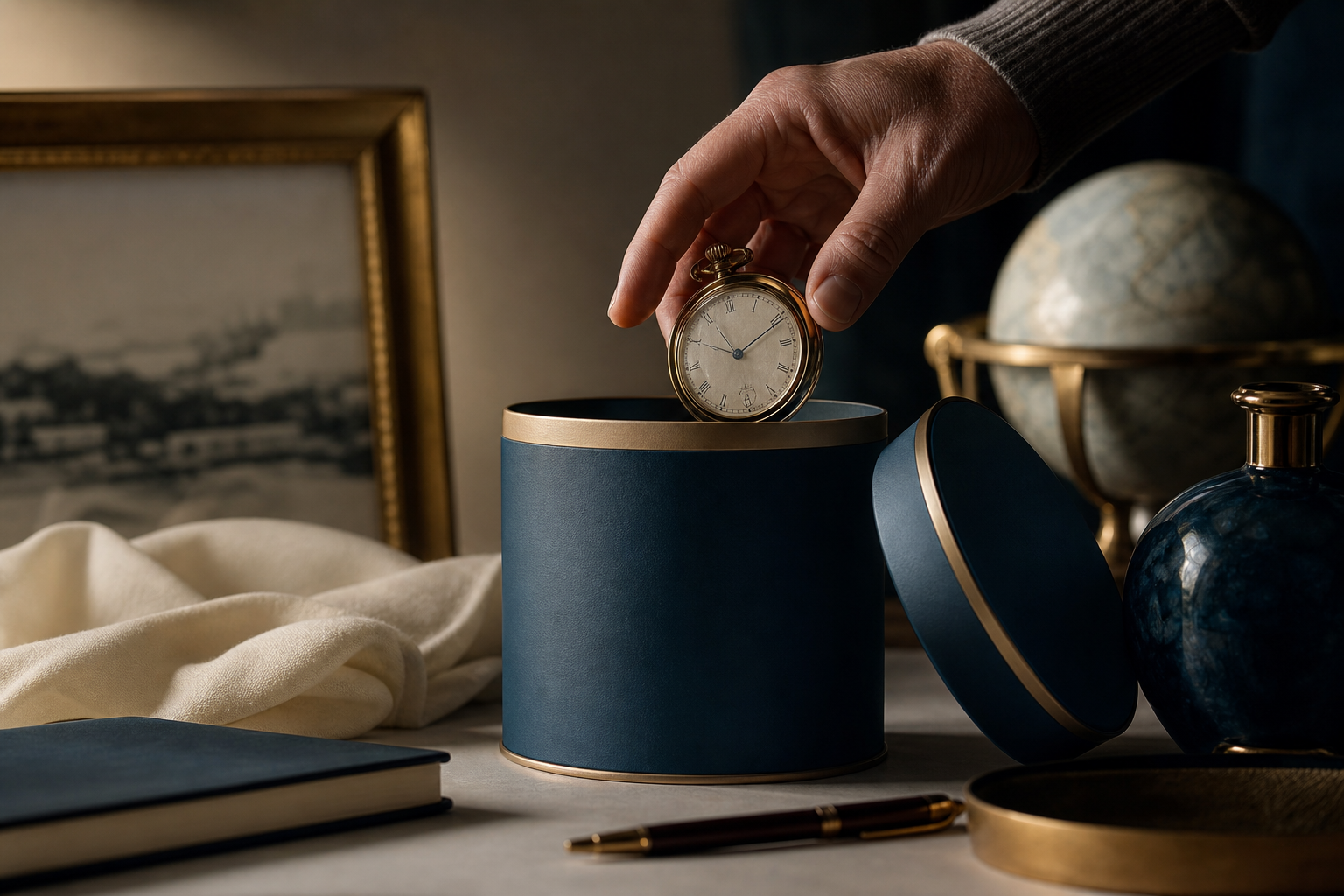
Preparing a capsule for retirement is a way to pause before a major change and decide what deserves to be remembered, shared or protected. It doesn't have to be a literal box or a complex digital file: can combine letters, fotografías, small objects, context documents and messages intended for oneself or others. The essential thing is that it has a clear purpose and that it can be opened, understood and preserved over time.
Retirement is not the same for everyone. For some people it represents rest; for others, a reorganization of identity, of schedules and relationships. A well-prepared capsule does not try to summarize an entire life. Its value lies in gathering what helps to understand a moment of transition and to give it continuity. It can serve to celebrate a professional career, to show gratitude for support, to record important decisions or to open family conversations that are usually postponed.
This article proposes a cautious method to create a retirement capsule with personal meaning, attention to privacy and long-term preservation options. The recommendations should be adapted to the family situation, heritage and emotional of each person.
Before gathering memories, it is advisable to answer a simple question: why is this capsule being created? The answer will determine the content, the level of intimacy, the format, and the people who will be able to access it. It is not the same to prepare a capsule to open in the first year of retirement as another intended for children, friends, or future generations.
A capsule can have one or several purposes. It can be a farewell to paid work, a portrait of everyday life at the time of retirement, a collection of lessons learned or an emotional legacy. It can also help organize pending matters without turning the project into an administrative file.
A useful capsule is not measured by the quantity of memories, but by the clarity of the intention with which they are selected. Es preferible que incluya veinte elementos bien contextualizados a que acumule cientos de archivos sin fechas, nombres ni explicación.
También es importante distinguir entre una cápsula de memoria y un conjunto de instrucciones prácticas. Ambas cosas pueden coexistir, pero es recomendable separarlas. La primera puede contener una carta sobre lo que significó trabajar durante décadas; la segunda, si fuera necesaria, debería conservarse de forma actualizable y con acceso limitado.
La jubilación suele prepararse con antelación, pero no todas las personas viven el tránsito de la misma manera. Algunas quieren cerrar la cápsula en su último día de trabajo; otras prefieren esperar unos meses, cuando ya han comprobado cómo se sienten en la nueva rutina. Both options are valid if explained in the capsule itself.
One possibility is to divide the project into two moments. The first covers the previous stage: expectations, photos of the work environment, representative objects, and farewell messages. The second is completed six or twelve months later, with a reflection on what has really changed. This comparison can be especially valuable, because it distinguishes between plans and lived experience.
The opening date should be specific, but realistic. It may coincide with a retirement anniversary, a certain age, a family gathering, or an occasion chosen by the creator. If the content is very intimate, It is not advisable to set up automatic opening for family members without first defining the access conditions.
Setting a date does not mean freezing life: It only creates a meeting point between the person preparing the capsule and the one who will open it. That is why it is recommended to include an initial note with the creation date, the planned date of review or opening, and a brief explanation of the purpose.
Como recomendación, es prudente programar una revisión periódica, aunque la cápsula no vaya a abrirse plenamente. Revisar no significa releerlo todo ni modificar los recuerdos; puede consistir en comprobar el estado físico de los materiales, la accesibilidad de los archivos digitales y la vigencia de las instrucciones de custodia.
El contenido de una cápsula para la jubilación puede hablar del trabajo, pero no debería reducirse al empleo. La vida profesional se entrelaza con cuidados, amistades, mudanzas, estudios, aficiones, dificultades y decisiones personales. Elegir recuerdos diversos ofrece una imagen más completa y evita que la identidad quede limitada a un cargo o una empresa.
Conviene reunir materiales que respondan a tres preguntas: qué se hizo, how it was experienced and what was learned. A diploma can indicate training; a letter can explain the effort that went into it; a photograph of a work table can show daily habits that do not appear in official documents.
Everyday objects, well explained, usually retain more meaning than memories considered 'important' without context. A transport card, an already closed planner, a notebook, a usual recipe or a museum ticket can be relevant if accompanied by a few lines explaining why they are kept.
Es recomendable evitar convertir la cápsula en un depósito de todo lo acumulado durante una vida. La selección implica renunciar a materiales que no ayudan a contar la historia. Una regla práctica consiste en revisar cada elemento y preguntarse si alguien que no conoce el contexto entendería por qué está allí.
Cuando se incluyan recuerdos relacionados con un trabajo, hay que valorar la confidencialidad. Informes internos, datos de clientes, imágenes de terceros o documentación protegida por acuerdos profesionales no deberían incorporarse sin autorización. En esos casos, puede ser suficiente redactar un relato personal que describa la experiencia sin revelar información sensible.
Una cápsula se vuelve más comprensible cuando incorpora palabras. Las fotografías se separan de sus protagonistas, los objetos pierden referencias y las familias olvidan detalles que parecían evidentes. Por eso una carta, A notebook or several brief cards can be the most valuable element of the set.
It is not necessary to write long memoirs. An honest text of a few pages can capture moments of pride, Doubts, changes in direction and wishes for retirement. Quality does not depend on a perfect literary style, but on concreteness and one's own voice.
Explaining the context is a way to take care of those who will read the capsule when the details are no longer obvious. Instead of writing 'my best time at the office', it is more useful to indicate which years are being talked about, what was happening then, who was present and why that period left a mark.
A simple structure can start with the present: where the person lives, when he/she retires and how he/she feels. Later he/she can go through some decisive episodes, without needing to arrange them all chronologically. At last, he/she can include expectations, sensible advice or wishes for those who receive the material.
It can also be useful to answer in writing questions like these:
It is reasonable to include complex feelings. Una jubilación puede generar alivio y pérdida al mismo tiempo. However, hay una diferencia entre expresar una emoción y trasladar una carga a quien leerá el texto. Si la carta aborda conflictos familiares, decepciones o asuntos dolorosos, conviene valorar el impacto de nombrar a terceros y elegir un tono respetuoso.
La sinceridad no exige revelar todo; exige decidir conscientemente qué se comparte, con quién y para qué. Algunas reflexiones pueden guardarse en un apartado privado, con instrucciones distintas de acceso, o pueden quedar fuera de la cápsula si no resulta apropiado conservarlas.
Uno de los riesgos más frecuentes al crear una cápsula es mezclar recuerdos emotivos con información que puede quedar obsoleta, facilitar fraudes o exponer la intimidad de otras personas. Una fotografía de una jubilación y una copia de una tarjeta bancaria no tienen las mismas necesidades de custodia. Tampoco deben recibir el mismo tratamiento los mensajes familiares y las claves de acceso.
Una cápsula de memoria no debe convertirse en un lugar donde se acumulen contraseñas, datos financieros o documentos sensibles sin protección. Si la persona desea dejar instrucciones sobre cuentas, seguros, propiedades o trámites, es preferible utilizar un sistema independiente, actualizado y conocido por la persona autorizada para consultarlo.
Entre los materiales que conviene no incorporar directamente se encuentran documentos de identidad completos, números de cuenta, tarjetas, claves, códigos de recuperación, informes médicos detallados, copias de testamentos sin necesidad clara y datos personales de terceros. Incluso cuando la intención sea facilitar gestiones futuras, estos materiales pueden perder vigencia o quedar expuestos.
Esta clasificación no requiere herramientas sofisticadas. Puede aplicarse mediante sobres etiquetados, differentiated folders or digital files with different permissions. What matters is to make clear what can be read, who can do it and if there is a date or condition for it.
The rights and dignity of other people must also be considered. Including received letters, private messages or photographs of family members requires caution. Just because a document has come into our hands does not necessarily mean it should be kept or shared within a legacy. If there is doubt, the content can be summarized without reproducing it, ask for permission or exclude it.
Many retirement memoirs are already born in digital format: mobile phone photographs, Videos, voice messages, emails, presentations or scanned documents. Digital preservation has obvious advantages, but it is not automatic. A file can become inaccessible if you forget where it is saved, if it depends on an account without access instructions, or if it uses a format that is difficult to open in the future.
Saving files is not the same as preserving them: to preserve them they must be locatable, openable, and interpretable. This requires basic organization and periodic review. There is no need to pursue technical perfection; it is enough to reduce foreseeable risks.
For texts, fotografías, sounds and videos, it is advisable to choose common and widely used formats, without assuming that any format will be permanent. The practical recommendation is to keep, when it makes sense, both the original file and a copy in a commonly used format. For example, a photograph can be kept in its original file and accompanied by an easily viewable version; An audio file may include a brief transcription.
Metadata deserves attention. Photos and videos may contain information about date, location, or device. That information can be useful for memory, but also reveal addresses, routines, or private places. Before sharing copies with family or uploading materials to the internet, it is advisable to check what data accompanies the files.
The best digital copy is the one whose existence, location, and meaning are known by at least one trusted person. It is of little use to have multiple disks or accounts if no one knows what they contain or how to distinguish important files from duplicates.
Privacy is a central decision in any retirement capsule. Upon retiring, Many people have more time to organize memories, but that does not eliminate the need to protect one's own and others' information. The capsule can contain emotions, family images, work references and data that change in sensitivity over the years.
It is advisable to create an access sheet, separate from the content, indicating who can open each part. It does not have to contain passwords or secret data; it is enough to establish responsibilities. For example, it can state that a physical box will be handed over to two children when both are present, or that a private digital folder can only be consulted with the creator's express authorization while they are alive.
Granting access does not mean granting permission to share. Esta distinción debe aparecer de forma clara cuando la cápsula incluya imágenes, escritos o grabaciones que no se quieran publicar en redes sociales, grupos de mensajería o plataformas abiertas. Una frase sencilla puede evitar malentendidos: “Este material es para lectura familiar y no debe compartirse fuera de este círculo sin acuerdo previo”.
En el caso de las cuentas digitales, la prudencia es especialmente importante. Access and management conditions may vary between services, and credentials may stop working or become a security risk. Instead of including passwords in a capsule, it is safer to document the existence of important digital assets and keep instructions separate, updated and under proper custody.
A reasonable opinion is that the capsule should prioritize human relationships over absolute control. Not everything that will happen in twenty years can be foreseen. It is possible to leave a clear intention, select respectfully and choose a trusted person capable of acting with judgment.
A decorated cardboard box can be emotional, but it is not always suitable for storing photographs, papers or fabrics for a long time. Moisture, light, heat, insects and sudden temperature changes deteriorate many materials. Domestic preservation does not eliminate all risks, but it can considerably reduce them.
Stability usually protects memories better than any spectacular or costly solution. A dry, clean, dark place with relatively constant conditions is usually preferable to a damp storage room, a garage exposed to extreme temperatures or an area near pipes.
It is recommended to use clean, sturdy, and appropriately sized containers. Documents should not be unnecessarily folded, and photographs should be stored in a way that prevents them from sticking together. Metal objects, adhesives, dried flowers, food, pilas o materiales con olores intensos pueden afectar al resto del contenido con el tiempo.
Si se incluyen objetos con valor económico, histórico o familiar importante, quizá no sea conveniente encerrarlos durante años sin valorar su estado ni sus necesidades de conservación. En ocasiones, A quality photograph and a written explanation fulfill the symbolic function better than the original object.
The capsule should not be the only place where an irreplaceable memory exists. Old photographs, Unique letters or relevant family documents can be digitized and preserved separately. A responsible legacy combines caring for the original with copies designed for access and continuity.
Creating a capsule can be an individual task, but also an opportunity to share stories before they are lost. A family conversation, a farewell meal or an afternoon sorting photographs can bring memories that would not arise when working alone. The goal is not to force anyone to share personal details, but to open a voluntary space for listening.
A simple proposal consists of choosing one day to gather the materials, another to write or record messages, and a third to seal the capsule. This division avoids the pressure of resolving everything in a single session and allows for breaks between decisions.
Preparing the capsule can be as valuable as opening it, because it creates time to name what has been experienced. Many people discover, when organizing images or documents, that they want to ask something of a sibling, call a former classmate, or note an anecdote before forgetting it.
If family members participate, it is advisable to set boundaries. No todas las personas tendrán el mismo recuerdo de un acontecimiento, y no hace falta imponer una versión única. Pueden coexistir varias voces: una carta de la persona que se jubila, mensajes breves de familiares y una selección de imágenes comentadas por distintas personas.
La grabación de audio o vídeo puede aportar cercanía, especialmente para transmitir voz, expresiones y maneras de contar. Aun así, debe hacerse con consentimiento de quienes aparezcan y con una organización posterior que permita identificar quién habla, cuándo se grabó y sobre qué asunto.
Una cápsula no tiene por qué quedar cerrada para siempre desde el primer día. Algunas partes, como las cartas o los objetos simbólicos, pueden permanecer intactas. Other, especially digital directories and custody instructions, need review. Retirement can last many years and bring relocations, family changes, new hobbies and technological modifications.
A brief review from time to time allows checking that the box is still in good condition, that digital media work and that the person designated to safeguard the material knows their role. It is not necessary to modify the past or rewrite old letters. It is about maintaining the possibility of accessing the collection when the time comes.
Updating the instructions does not alter the memory; it protects the possibility that this memory reaches the appropriate person. A review sheet with dates can be added, changes of location and practical observations. Si se traslada la cápsula, conviene actualizar tanto la información de custodia como la de las copias digitales.
También es útil pensar qué ocurrirá si la persona que creó la cápsula pierde capacidad para gestionar sus archivos o fallece antes de la fecha prevista de apertura. No hace falta abordar este asunto de forma dramática, pero sí con realismo. Una persona de confianza debería saber que la cápsula existe y cómo actuar sin necesidad de interpretar indicios o buscar entre pertenencias privadas.
Cuando hay tensiones familiares, conviene simplificar. Una cápsula no debería utilizarse para resolver disputas patrimoniales, transmitir reproches ni sustituir conversaciones necesarias. Puede contener una visión personal, pero las decisiones relevantes sobre bienes, cuidados o responsabilidades deben tratarse mediante los canales adecuados y con asesoramiento profesional cuando sea necesario.
Antes de dar por terminada la cápsula, puede ser útil realizar una comprobación final. Esta lista no pretende imponer un modelo único, sino ayudar a detectar omisiones frecuentes.
Preparing a capsule for a retirement does not require an orderly life, a collection of great achievements, nor advanced technical knowledge. It requires attention. Attention to what you want to remember, to the privacy of the people involved, and to the conditions that will allow the materials to be preserved meaningfully.
Una buena cápsula de jubilación deja menos cosas ocultas y más historias comprensibles. Puede contener una carta, unas pocas fotografías identificadas, un objeto cotidiano y una hoja de instrucciones clara. Ese conjunto modesto, bien cuidado, puede ser más duradero y valioso que una acumulación difícil de entender.
Como acción inicial, reserve una hora, elija cinco recuerdos y escriba junto a cada uno por qué merece conservarse. Después decida quién debería poder conocer esa historia y qué parte debe permanecer privada. From there, la cápsula crecerá con un criterio más sólido: no guardar por miedo a perderlo todo, sino conservar de forma consciente aquello que ayuda a recordar, agradecer y continuar.
Log in or create your account without leaving this page.
WordPress administration remains available separately for authorized users.