



Una transformación urbana —la renovación de un barrio, la construcción de una infraestructura, a rehabilitation process or the replacement of industrial uses with residential ones—alters buildings, tours, relaciones vecinales y formas de entender un lugar. También modifica…
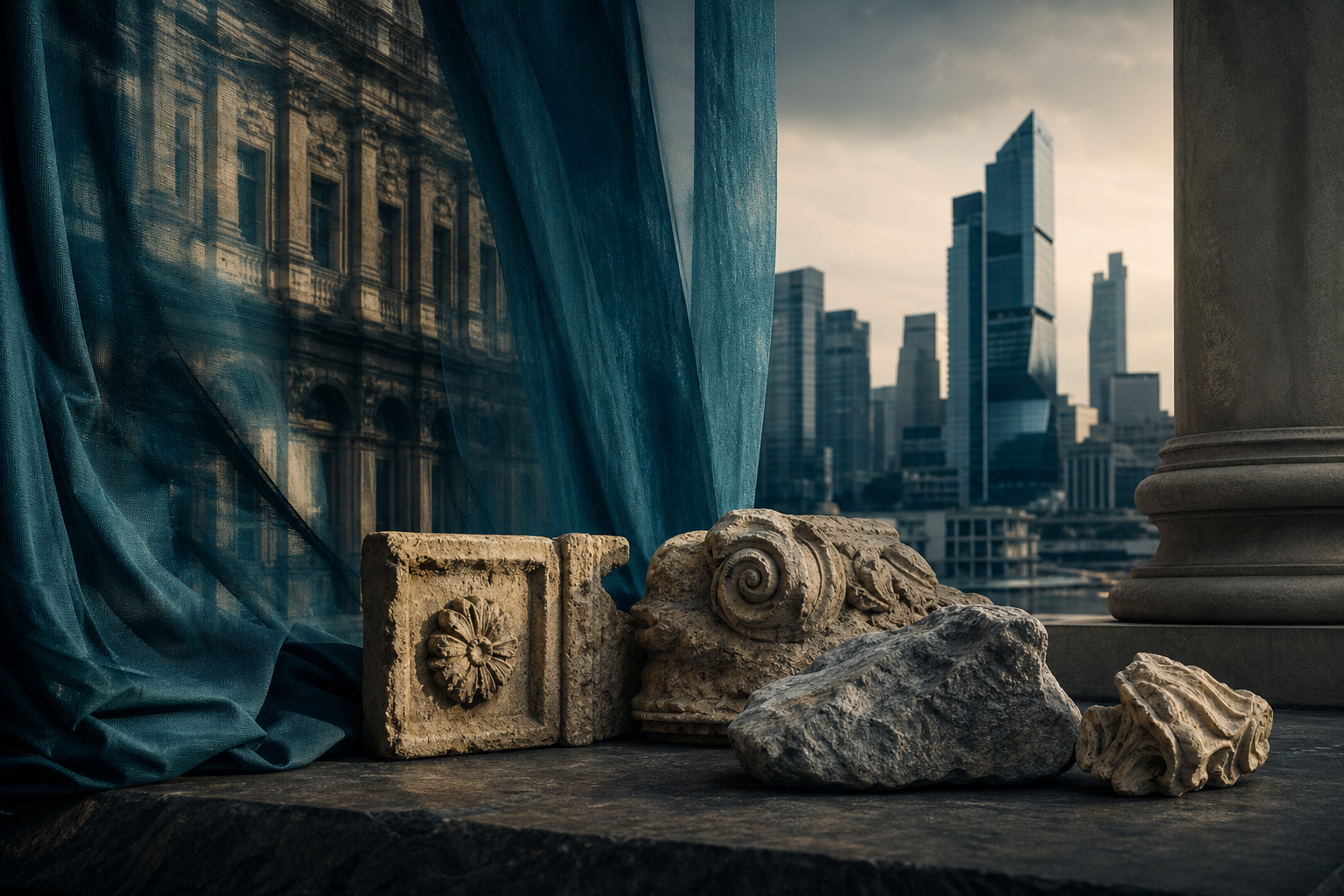
Una transformación urbana —la renovación de un barrio, la construcción de una infraestructura, a rehabilitation process or the replacement of industrial uses with residential ones—alters buildings, tours, relaciones vecinales y formas de entender un lugar. It also modifies the available memories. When a familiar street disappears, local commerce changes or families move, not only an image of the past is lost: routines can be interrupted, care networks, local vocabularies and shared references.
Collective memory after an urban transformation does not consist of preserving a nostalgic and immobile version of what existed. It consists of creating conditions for different people to remember, contrast, complete and transmit their experiences. Preserving urban memory is preserving connections between people, spaces, dates and meanings. This task requires sensitivity, method and attention to privacy, because the stories of a neighborhood can include conflicts, losses, delicate economic situations or third-party data.
This article proposes a practical way to document and care for that long-term memory. It is designed for neighborhood associations, families, educational centers, community archives, cultural collectives and any group that wants to gather materials without simplifying the history of the place.
A work can represent improvement, opportunity or security for some people, and uprooting, uncertainty or loss for others. Even within the same family, different perceptions can coexist: someone who found more accessible housing may remember the transformation positively; someone who had to leave the neighborhood may associate it with a rupture. None of these perspectives alone exhaust what happened.
Collective memory is not a single story: it is a conversation between memories that sometimes coincide and sometimes disagree. Therefore, a memory project must avoid from the beginning the search for an official narrative, impeccable or exclusively celebratory. The usefulness of the archive increases when it allows for nuances: beneficial changes, unresolved difficulties, contradictory emotions and questions that still have no answer.
It is advisable to distinguish between various levels of memory. There is personal memory, linked to a specific experience; family memory, transmitted across generations; neighborhood memory, formed by shared experiences; and institutional memory, present in plans, files, press releases or official photographs. These levels can complement each other, but they are not equivalent. An urban plan can explain what was projected; an interview can explain what it felt like to see a doorway or a square disappear.
Before starting to collect documents, it is useful to define which questions one wants to answer in the future. No basta con guardar “cosas del barrio”. Una selección razonada permite que los materiales sean comprensibles dentro de unos años, cuando ya no estén presentes quienes conocen de primera mano cada nombre, esquina o acontecimiento.
Las respuestas no tienen que ser definitivas. Pueden servir como mapa inicial para decidir qué fotografías pedir, qué personas entrevistar y qué documentos contextualizar. Un archivo útil no reúne únicamente objetos; conserva la información necesaria para interpretarlos. Una foto de una fachada puede resultar valiosa, pero será mucho más significativa si incluye fecha aproximada, location, known authorship, motivo de la imagen y explicación de lo que aparece.
También conviene prestar atención a materiales aparentemente menores: recibos de un negocio, programas de fiestas, carteles de reuniones, notas manuscritas, mapas anotados, recetas asociadas a una comunidad migrante, dibujos infantiles o mensajes sobre una mudanza. No todo deberá publicarse ni todo tendrá el mismo valor para todas las personas, but those materials can provide a everyday dimension that rarely appears in administrative documents.
The memory of an urban change is built better if it is collected in various stages. When the project has already finished, many pieces of evidence have been lost: signs have been removed, premises have been emptied, residents have changed their address and some digital files have ended up scattered on phones or personal accounts.
Before the intervention, it is possible to document the spaces, existing uses and relationships. It is a good time to photograph facades, shops and everyday corners, but also to record sounds, routes and testimonies. A recording of the atmosphere of a market, of a station or a courtyard can convey aspects that a photograph does not capture. Si se registran sonidos o imágenes de personas identificables, será necesario atender especialmente al consentimiento y a la posible difusión posterior.
Durante las obras o el proceso de cambio, es aconsejable anotar fechas, decisiones observables y transformaciones concretas sin apresurarse a interpretar todo. For example, se puede consignar que un paso peatonal se cerró durante un periodo, que un comercio se trasladó o que se creó un espacio provisional de reunión. Separar la observación de la interpretación ayuda a conservar un registro más honesto y revisable.
Después, el archivo puede recoger usos emergentes: quién ocupa el nuevo espacio, qué actividades se desarrollan, qué problemas persisten y qué recuerdos se mantienen. It is important not to treat the 'after' as a final point. The social effects of a transformation can develop over time, and later generations will interpret the neighborhood from different experiences.
Interviews are a valuable tool because they allow you to recover details that do not appear in photographs or reports. However, They are not a simple extraction of information. The interviewer must create a context of listening, Explain what the material will be used for and accept that the interviewee may change their mind, Omit issues or stop the conversation.
It is preferable to ask open-ended questions: 'What was a normal day like on this street?'?”, 'What changed for you when this place closed?'?”, “¿Qué le gustaría que entendiera alguien que no vivió aquí?”. También pueden emplearse fotografías, mapas o canciones como disparadores de memoria, sin presentar esos elementos como pruebas concluyentes de una única versión.
Un testimonio no necesita ser exacto en cada fecha para ser significativo como experiencia. Los recuerdos pueden contener imprecisiones, superposiciones de momentos o interpretaciones que han cambiado con el tiempo. En vez de corregir de forma brusca a la persona, conviene diferenciar lo que se recuerda de lo que puede verificarse en otros documentos. Si hay una discrepancia relevante, puede conservarse como tal, indicando que se trata de una percepción o de un recuerdo personal.
En algunos casos, un relato puede afectar a otras personas que no han participado en la conversación. For example, una entrevista puede mencionar una enfermedad, una disputa, una situación laboral o una dirección concreta. T.
h. e, pero una fotografía aislada puede inducir a conclusiones equivocadas. w, i. l.
l, fecha exacta o aproximada, place, t, origin, o, derechos o permisos conocidos y una nota sobre lo que no se sabe. p: avoid turning a hypothesis into certainty.
Collaborative maps can be especially useful for linking memories with places. An old workshop, una fuente, a cinema or an empty lot can be placed on a current or historical map, as long as the date of each reference is indicated. Memory maps should show the passage of time, do not pretend that all memories belong to the same moment.
Regarding physical objects —plaques, brochures, v, signs, tools or notebooks— it is advisable to assess whether the group can preserve them properly. If minimum protection conditions are not available, it may be more responsible to document them through photographs and a description than to accept precarious custody. Preservation is not just gathering: implies taking on material care, access and possible return.
Every memory project gathers information about people, even when its purpose is cultural or community-related. An image of a celebration, a list of former residents or a story about an eviction can reveal identities, relationships and sensitive circumstances. Before publishing or sharing materials, it is advisable to ask who could be affected and in what way.
Informed consent must be understandable, specific and proportional to the intended use. It is not the same to agree that a photograph is kept in a private archive as to authorize its dissemination on social networks, an open exhibition or a downloadable publication. The person must know, in clear terms, where the material will be stored, quién podrá acceder, whether it will be edited and how changes in your preferences can be communicated.
There are situations that require special caution: minors, people in vulnerable situations, experiences of violence, ongoing neighborhood conflicts, health data, información económica, current addresses and family documents that include third parties. When in doubt, the safest option is usually to limit access, anonymize certain data, delay publication or not distribute the material.
Anonymization is not always complete. Removing a name may be insufficient if details remain that allow someone to be easily identified within a small community. It is also necessary to consider that a combination of photographs, dates, relationships and locations can reveal more than expected.
Not all materials need to have the same level of visibility. It can be useful to establish simple categories: public access, access for registered participants, restricted access to the custodial team and closed access until an agreed date or condition. Restricting a document is not the same as hiding the history; it can be a way to protect it and make it sustainable.
These decisions should be noted alongside the material, do not rely solely on the memory of the person who received it. If a person withdraws their authorization for a specific use, the group should have a reasonable procedure to record the request and review the channels in which the content had been shared.
Storing files on a phone, A personal account or a single external drive does not guarantee its preservation. Devices fail, Passwords are lost, Services change and formats may stop opening easily. Digital preservation requires copies, organization and periodic reviews, Not just storage space.
A basic strategy can start by gathering the original files, Creating working copies when necessary and maintaining a coherent folder structure. File names should help identify the content without including overly sensitive data. For example, A combination of approximate date, Place, and type of document can be more useful than generic names like 'final photo' or 'new audio'.
Es recomendable mantener al menos varias copias en ubicaciones separadas y comprobar de vez en cuando que los archivos siguen abriéndose. También conviene conservar información descriptiva fuera del nombre del archivo: una hoja de cálculo, una base de datos sencilla o fichas vinculadas pueden recoger permisos, origin, contexto y restricciones de acceso.
Los formatos extendidos y bien documentados suelen facilitar el acceso futuro, pero no eliminan la necesidad de revisión. Si se digitalizan fotografías o documentos, debe conservarse, when possible, una copia de calidad suficiente y una versión más ligera para consulta. En el caso de audios y vídeos, es útil registrar la duración, el idioma, las personas participantes y un resumen del contenido.
The most valuable file can become useless if no one knows what it contains, who can see it or how to retrieve it. That is why organizational continuity matters as much as technology. A partnership should prevent the only access from depending on a single person's private account. It is preferable to designate responsible persons, securely document passwords and procedures, and plan for what will happen if the team changes.
The memory of a neighborhood should not depend exclusively on those who have the most time, visibility or technical ability. If only certain groups participate, the archive can reproduce existing silences. Rents, age, origin, language, working hours, Disabilities or the digital divide can make it difficult for some people to contribute their materials and stories.
Real participation requires designing different ways to contribute, not just opening a call for submissions. There may be in-person sessions, home collection of photographs, simple forms, intergenerational workshops, physical mailboxes or meetings at different times. It is also advisable to explain that not all contributions will be published automatically and that the lack of documents does not invalidate an experience.
The project's governance must clarify basic issues: who safeguards the materials, who decides on publications, how disagreements are resolved, how corrections are requested and what will happen if the project is dissolved. It is not necessary to create a complex structure from day one, but it is necessary to put understandable and reviewable rules in writing.
When an institution participates, it can provide resources and stability, but it should not appropriate community voices without dialogue. Similarly, A neighborhood group can maintain autonomy without giving up technical advice. Trust is built when decisions about memory are transparent and shared.
Every urban transformation generates shadow areas. There can be disagreements about the causes of change, about the actions of administrations, owners, companies or associations, or about the remembrance of certain events. The purpose of a community archive does not have to be to arbitrate every conflict or declare a winning version.
Una práctica responsable consiste en diferenciar documentos, testimonios y comentarios editoriales. Si se presenta una afirmación controvertida, puede atribuirse a quien la formula y situarse en su contexto. Cuando haya fuentes diversas, se pueden mostrar sin forzar una reconciliación artificial. Reconocer el desacuerdo puede ser más fiel que borrar las diferencias para producir un relato cómodo.
Las ausencias también merecen atención. Quizá no existan fotografías de ciertas familias, quizá determinados residentes no quieran participar o quizá un grupo haya sido históricamente invisibilizado. No conviene rellenar esos vacíos con suposiciones. Es preferible dejar constancia de que el archivo es incompleto y mantener abiertas vías de incorporación futura.
In addition, Some memories can reactivate pain. Whoever coordinates the project must know how to stop an activity, Offer a pause and avoid turning suffering into an exhibition resource. Memory can promote recognition, But it should not require anyone to retell an experience to prove it happened.
An urban memory project can start modestly. The important thing is that growth does not prevent maintaining control over the materials, The permissions and expectations. A first trial phase allows learning what works and what support the group needs.
La calidad no depende de una presentación sofisticada. Depende de la claridad con que se expliquen los materiales, del respeto con que se traten las personas y de la capacidad de mantener el archivo accesible y protegido con el paso del tiempo.
Después de una transformación urbana, conservar memoria colectiva significa atender tanto a lo visible como a lo que podría desaparecer sin dejar rastro: una ruta cotidiana, una relación de apoyo, el nombre popular de un lugar, una preocupación expresada en una reunión o la experiencia de una mudanza. El objetivo no es detener el cambio urbano, sino evitar que el cambio borre sin reflexión las vidas que lo atravesaron.
El siguiente paso puede ser sencillo y concreto: reunir a un grupo pequeño, elegir una pregunta común, identificar cinco materiales o testimonios iniciales y acordar por escrito cómo se custodiarán. From there, cada incorporación debería llevar contexto, permisos claros y una decisión de acceso proporcionada. Una memoria bien cuidada puede convertirse en un recurso de pertenencia, diálogo y aprendizaje para quienes vivieron el cambio y para quienes llegarán después.
Log in or create your account without leaving this page.
WordPress administration remains available separately for authorized users.