



A treasure hunt can be a family, school activity, Community-based or linked to the memory of a loved one. Adaptarla para participantes con movilidad reducida no consiste en “simplificarla” ni en crear una experiencia paralela: consiste en…
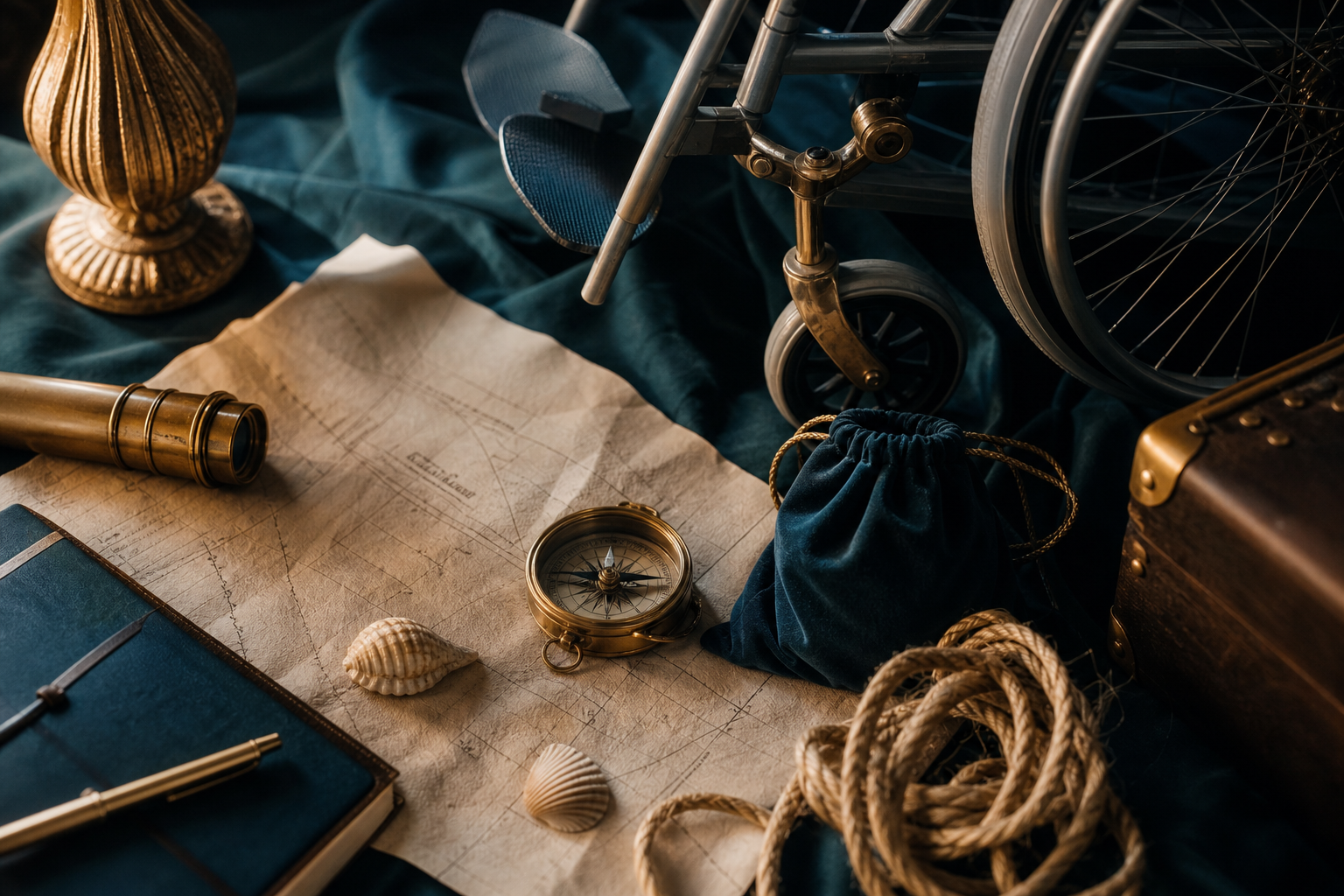
A treasure hunt can be a family, school activity, Community-based or linked to the memory of a loved one. Adaptarla para participantes con movilidad reducida no consiste en “simplificarla” ni en crear una experiencia paralela: consiste en diseñarla para que todas las personas puedan tomar decisiones, explorar, colaborar y disfrutar del descubrimiento en condiciones de dignidad.
La movilidad reducida puede tener causas y manifestaciones muy diversas. Puede afectar a una persona que utiliza silla de ruedas, muletas, andador o prótesis; a alguien con dolor crónico, fatiga, lesión temporal, dificultades de equilibrio o menor resistencia; o a una persona mayor que se desplaza con lentitud. También pueden intervenir necesidades de acompañamiento, pausas frecuentes o acceso a aseos. La adaptación más útil empieza por no dar por hecho qué puede o no puede hacer cada participante.
Este artículo ofrece un método práctico para preparar una búsqueda del tesoro inclusiva sin perder sorpresa, reto ni valor emocional. Aunque algunas decisiones exigen más tiempo de planificación, muchas mejoras benefician al conjunto del grupo: rutas más claras, pistas legibles, descansos razonables, alternativas ante imprevistos y una mejor conservación del recuerdo de la actividad.
Una búsqueda del tesoro inclusiva no se limita a eliminar escaleras. La accesibilidad incluye la llegada al lugar, el desplazamiento entre pruebas, la altura de los elementos, la claridad de las instrucciones, la duración, las condiciones de luz, la posibilidad de descansar y la manera en que el grupo coopera.
It is worth distinguishing between equality and equity. Giving every person exactly the same path may seem fair, but it will not be if some are excluded by a curb, a narrow door, or a test that requires bending down. Equity consists of providing reasonable means for each participant to contribute effectively to the shared goal.
The goal is not for everyone to make the same movements, but for everyone to have meaningful participation. For example, A person may locate a visual clue from an accessible position, solve a puzzle, guide the team with a map, guard the pieces found, or decide the order of the next steps. These contributions should not be presented as secondary tasks, but as necessary parts of the mission.
Sometimes, with good intention, the organizer assumes that a person with reduced mobility would prefer to stay on the sidelines of the more complex tests. It is better to ask before deciding. A simple phrase like 'Is there anything that would make it easier for you to participate comfortably'?allows receiving useful information without turning the conversation into a medical interrogation.
It is also important not to infantilize. An adult person does not need to be praised for participating nor have their needs publicly explained. Discretion, respect and autonomy are central elements of a good experience.
Planning improves greatly when a prior consultation is conducted, brief and voluntary. It is not necessary to request diagnoses or intimate details. It is enough to know the practical needs that may affect the design: type of tolerable terrain, approximate duration that can be assumed, need for breaks, access to toilets, assistance for transfers if applicable, transportation or preference for receiving the tracks in paper or digital format.
Request functional information, and not unnecessary clinical information, it protects the privacy of the participants. Instead of asking 'What health problem do you have',?”, it is more appropriate to ask 'Are there access or mobility barriers we should anticipate'?”.
If minors participate, communication should be made with their mothers,, fathers or legal representatives, atendiendo también a la voz del propio menor cuando pueda expresar sus preferencias. Si la actividad se organiza en una residencia, un centro educativo o una asociación, puede ser necesario coordinarse con profesionales de referencia, siempre dentro de los límites de confidencialidad aplicables.
La información recogida debe utilizarse únicamente para organizar la actividad. No conviene enviarla al grupo completo por mensajería ni incluirla en documentos compartidos sin necesidad. La accesibilidad no requiere exponer la situación personal de nadie ante los demás.
El recorrido determina buena parte del éxito. Un lugar anunciado como accesible puede presentar obstáculos en la práctica: adoquines irregulares, grava suelta, rampas con pendiente acusada, puertas pesadas, estrechamientos, obras temporales, mobiliario urbano, terrazas, raíces, zonas con poca sombra o ascensores fuera de servicio.
s, Who organizes should go through the itinerary under conditions similar to those planned for the event. It is not enough to consult photographs or maps. In-person review allows measuring real times, Locate rest points and detect problems that do not appear on the internet.
A short route, Continuous and well-checked is usually more inclusive than a long adventure full of uncertain alternatives. If the group wants an extensive activity, It can be divided into autonomous stages with comfortable meeting points. Así, Anyone who needs to stop can rejoin without feeling they have delayed the team.
Es recomendable que las pistas principales estén situadas entre una altura aproximada de cintura y hombros de una persona sentada, o que puedan observarse y recogerse sin necesidad de estirarse, trepar o agacharse. Cuando esto no sea viable, se puede usar un sistema alternativo: un código visible, una fotografía de detalle, una tarjeta entregada por un colaborador o una pista digital activada al llegar al punto.
Un escalón, A narrow path or unstable terrain can be part of the environment of a search, but they should not be a requirement to continue. Designing a secret alternative route can create inequality if it seems like a less interesting version. It is preferable to prepare an equivalent solution, with the same narrative weight and the same possibility of finding relevant information.
For example, if a clue is linked to a sculpture located behind some steps, the team can receive an enlarged image of the piece and solve the same question from a flat area. The test still remains observation and interpretation, not the ability to climb steps.
The best clues do not depend on a single physical skill. A good design mixes observation, memory, language, logic, creativity and collaboration. This expands participation possibilities and makes the game more interesting for the entire group.
An accessible clue does not have to be easier; it can be just as clever and, at the same time, solved from different positions and paces. Instead of hiding a key under a heavy object, a riddle that leads to a word, a symbol, or a combination can be proposed. Instead of asking someone to reach a branch, one can invite identifying colors, dates, letters or shapes present in the environment.
Printed clues should use clear fonts, good contrast and a readable font size. It is advisable to avoid decorative backgrounds that make reading difficult, texts that are too compact and ambiguous instructions. Si habrá luz escasa, es útil llevar una versión con mayor contraste o una pequeña luz portátil.
Las pistas de audio pueden resultar útiles, pero no deben ser la única vía cuando haya ruido ambiental, problemas de batería o personas que prefieran leer. Una buena práctica es ofrecer el texto y el audio, o asegurar que un miembro del equipo pueda leerlo en voz alta sin alterar la mecánica.
Los códigos QR pueden facilitar la adaptación de contenidos, pero dependen de dispositivos, datos móviles, batería y conocimientos digitales. Si se usan, conviene incorporar una alternativa visible o impresa. Ninguna prueba esencial debería depender exclusivamente de un teléfono móvil ajeno o de una conexión inestable.
Una pista puede admitir más de una manera de conseguir la información. For example, para descubrir el nombre de un lugar, el grupo puede leer una placa, escuchar una descripción grabada, consultar un sobre con fotografías o recibir una indicación verbal de una persona colaboradora. Lo importante es que todas las vías conduzcan al mismo avance narrativo.
También puede ser útil incluir pistas escalonadas. La primera ofrece el reto principal; una segunda ayuda opcional evita bloqueos largos; una tercera permite continuar si hay cansancio, mal tiempo o poco margen. Esto reduce la presión sin desactivar la satisfacción de resolver.
La dinámica social puede incluir o excluir tanto como la ruta. Si hay varias personas participantes, es preferible formar equipos pequeños y equilibrados, avoiding that the person with reduced mobility is automatically accompanied by someone who 'takes care of' them. That structure can reduce autonomy and place responsibility on a single person.
Help should be offered, not imposed, and should respond to a specific need expressed or accepted by the person receiving it. Pushing a chair without asking, holding someone while walking or taking their phone to solve a task are gestures that can invade their autonomy, even if they arise from good intentions.
An effective way to share participation is to assign rotating roles. Each person can take on a different responsibility at each stage, with the freedom to exchange it: reading the clue, interpreting the map, keeping track of the time, documenting findings, storing the treasure pieces, communicate the answer or choose between two equivalent paths.
If the search is designed for a family, it can be especially valuable to incorporate knowledge from different generations. An older person can provide memories of the neighborhood, A girl or boy can detect visual details and another person can handle the digital support. Cooperation works best when each contribution truly affects the team's progress.
Inclusive planning requires margins. Tiredness, pain, fatigue or difficulty in overcoming obstacles can increase throughout the activity, even when the beginning has been comfortable. Scheduling breaks does not mean that the group has failed; it means that a sustainable experience has been designed.
It is helpful to announce an estimated duration from the start, but without imposing a rigid pace. If there is an end at a fixed time, such as a meal, a reservation, or the opening of a space, There must be a plan to shorten the activity without leaving the group without a conclusion.
A good Plan B preserves the experience: It is not a last-minute concession, But part of responsible design. That plan may consist of providing a rescue clue, Moving the ending to a covered location, Converting two outdoor stages into a tabletop challenge or closing the search with a narrative message that maintains the satisfaction of the discovery.
The exact content will depend on the location and the participants, But it may be wise to bring water, Protection against sun or rain, Portable charger, Printed copies of the clues, Adhesive tape, Pens, A contact list and a simple map. If personal medications are expected, deben ser gestionados por quien los utiliza o por la persona acordada previamente, sin que la organización manipule tratamientos ajenos salvo que exista una responsabilidad específica y consentida.
En actividades al aire libre, hay que valorar la temperatura, la exposición solar y la previsión meteorológica. Un recorrido que parece sencillo puede resultar exigente en días de calor o tras la lluvia. También conviene tener en cuenta que una silla de ruedas, unas muletas o un andador pueden comportarse de manera distinta según el terreno.
No es necesario dramatizar, pero sí saber qué hacer ante un problema. Identifica la dirección exacta de los puntos principales, keep the phone charged and agree on who can accompany the rest of the group if someone needs to stop. In large spaces, a clear meeting point reduces confusion.
In case of an incident, the priority is the safety and willingness of the affected person, not completing the game according to the original plan. If someone expresses pain, exhaustion or insecurity, they should not feel like they are ruining the activity. The search can be paused, changed or ended early; taking care of the group is part of the success.
Technology can enhance a treasure hunt: audio with familiar voices, old photographs, interactive maps, short videos or scheduled messages. It is especially useful for bringing content closer that cannot be physically placed in an accessible location. However, It is advisable to avoid having the experience depend entirely on an application, a social network or a specific device.
Before using digital tools, decide what data will be collected and where it will be stored. A family activity does not need, by default, to request real-time locations, to create public profiles or share images on open platforms. The most respectful option is usually to collect only the essential data and keep it for the necessary time.
If messaging groups are created, it may be preferable to limit their use to logistical information and avoid forwarding photographs without permission. If there will be minors, vulnerable people or participants who do not want to appear in images, this decision must be effectively respected. It is not enough to ask once if content is then published indiscriminately.
Documenting the search can turn it into a valuable memory, but each person must be able to decide if they appear, how they appear and who has access to the result. A voluntary photo zone or moment can be created, so that those who do not want to be photographed can still fully enjoy the game.
To preserve digital materials, it is reasonable to save selected photographs, the clues and a brief explanatory text in an organized folder. File names can include date, general location and content, without adding unnecessary sensitive information. For example, 2025-0'6-family-search-clue-garden.jpg' is more useful in the long term than 'IMG_4821.jpg'.
Preserving a memory does not require publishing the intimacy of those who participated. A private version for the family or group can have more value than an open post that is difficult to control in the future.
The treasure does not have to be expensive or bulky. It can be a box with letters, fotografías, small symbolic objects, family recipes, seeds to plant, tickets for a future activity, a list of shared memories or a message prepared by people who could not attend. What is important is that the closure is accessible and consistent with the tone of the search.
Avoid hiding the prize in places that require kneeling, climbing, crossing a narrow space or handling weight. If a box is used, it should be easy to open or have help available without that help becoming a spectacle. The presentation also matters: a stable table, a comfortable height and enough space around allow everyone to get close.
The final moment should allow looking, touching, reading or listening to the treasure without anyone being positioned behind the group. In family celebrations, this scene is usually the one remembered and photographed; it deserves specific preparation.
When the search has a memory component, the treasure can include materials that connect generations. For example, a letter with anecdotes from a grandmother, copies of old photographs, a map of important places for the family or a voice recording made with consent. If original documents are used, the risk of loss must be assessed, humidity, stains or deterioration.
In many cases it is preferable to use copies during the game and keep the originals in a safe place. Old photographs can be digitized and reproduced on paper; delicate letters can be transcribed or photographed; fragile objects can be shown at the end, without passing from hand to hand during the tour.
A pilot test allows discovering mistakes without pressure. It does not have to reproduce the entire search; it is enough to review the most delicate points: access, route, height of the clues, visibility, duration of the segments, funcionamiento de códigos y disponibilidad de alternativas.
Si no es posible invitar a la persona participante a probar la ruta, no se debe asumir que otra persona puede representar exactamente su experiencia. Aun así, una revisión con mirada crítica ayuda a detectar barreras evidentes. También puede ser útil consultar información actualizada del espacio o preguntar al personal del recinto sobre accesos, obras y horarios.
La accesibilidad se comprueba en el uso real, no solo en una lista de intenciones. Una rampa puede existir y, yet, estar bloqueada; un ascensor puede figurar en un plano y encontrarse fuera de servicio; un camino puede ser transitable en seco y complicado después de la lluvia.
Después de la actividad, merece la pena recoger impresiones. No hace falta convertir el cierre en una evaluación formal; puede bastar con preguntar qué parte resultó más divertida, qué punto fue incómodo y qué cambiaría cada persona. Si alguien señala una barrera, conviene escuchar sin justificar de inmediato las decisiones tomadas.
La mejor fuente para mejorar una actividad inclusiva son las personas que la han vivido. Sus comentarios pueden servir para ajustar futuras búsquedas, revisar el material, cambiar una ubicación o preparar instrucciones más claras.
Para conservar el legado de la experiencia, reúne las pistas definitivas, las respuestas, un mapa del recorrido, fotografías autorizadas y una breve crónica. Anota quién creó cada elemento y qué significaba, especialmente si la búsqueda estaba relacionada con una historia familiar. In a few years, esos detalles ayudarán a comprender el contexto de los recuerdos.
Guarda los archivos en formatos habituales y fáciles de abrir, y mantén más de una copia en ubicaciones controladas. Revisa de vez en cuando que los archivos sigan siendo accesibles y que las personas autorizadas sepan dónde encontrarlos. Si el material contiene imágenes, cartas o datos personales, establece quién puede verlo y qué ocurrirá con él en el futuro.
Adaptar una búsqueda del tesoro para participantes con movilidad reducida requiere observación, escucha y flexibilidad, pero no exige renunciar al misterio ni a la emoción. Una ruta comprobada, pistas con alternativas, descansos previstos, papeles de equipo relevantes y un final accesible transforman la actividad en una experiencia compartida de verdad.
Como siguiente paso, elige el lugar, revisa el recorrido presencialmente y prepara al menos una alternativa para cada prueba esencial. Después, Respectfully consult the practical needs of the participants and agree on privacy rules before starting. When accessibility is incorporated from the first sketch, the treasure is no longer at the end of the path: it is also in the way of traveling it together.
Log in or create your account without leaving this page.
WordPress administration remains available separately for authorized users.