



Family memory is not limited to old photographs or documents kept in a drawer. It also lives in a recipe explained orally, en el nombre de un vecino, en una carta breve, en una canción…
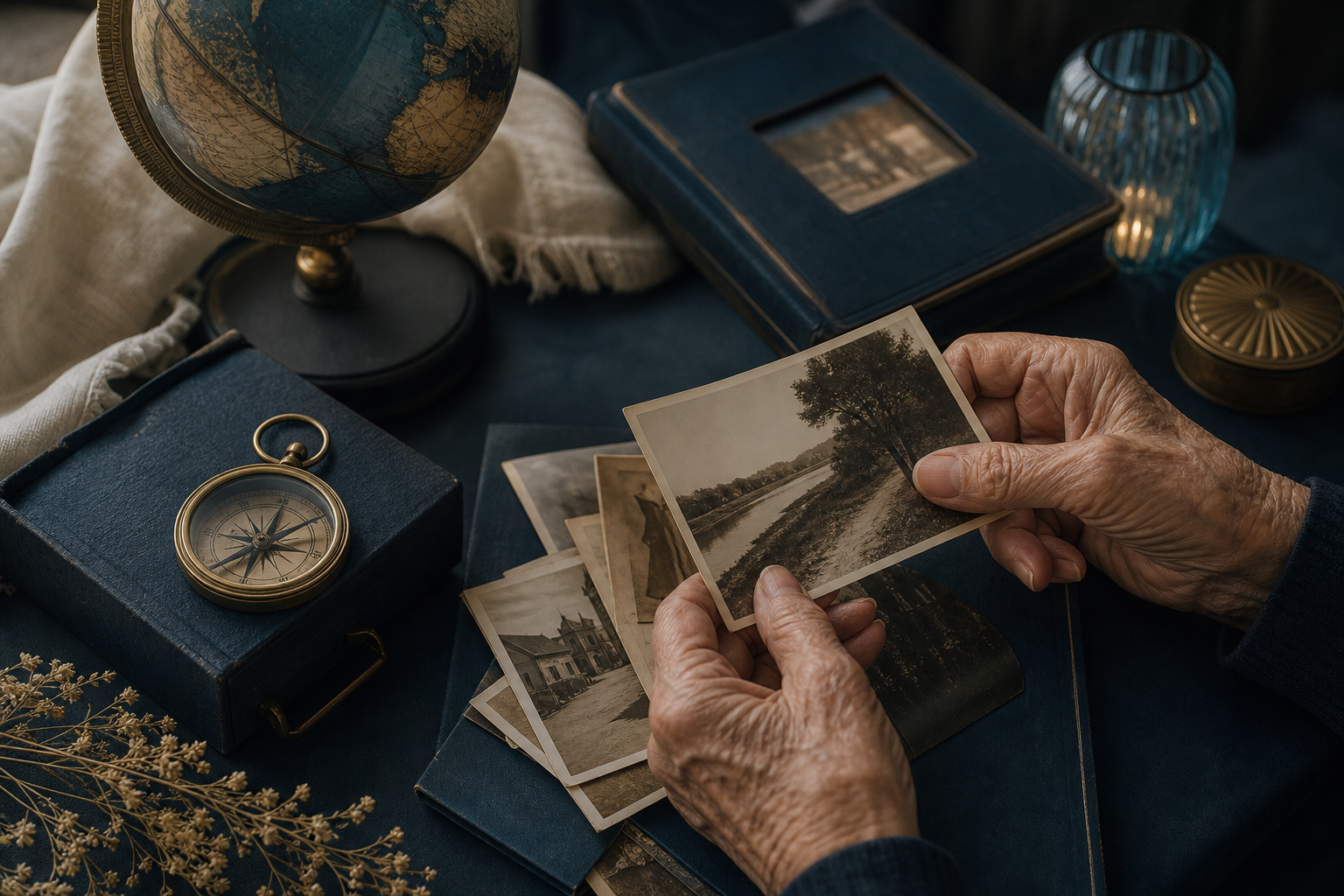
Family memory is not limited to old photographs or documents kept in a drawer. It also lives in a recipe explained orally, en el nombre de un vecino, en una carta breve, in a song associated with a journey or in the way of solving an everyday problem. For many elderly people, sharing these memories can be an opportunity for recognition, bond and continuity. For their families, it can become an emotional archive that helps to understand where they come from and what values they want to preserve.
Creating memory paths consists of organizing that personal heritage in a comprehensible and respectful way. It does not require reconstructing a perfect biography or recording every detail. It is about, rather, opening paths so that memories, objects, and voices can meet, be contextualized and transmitted without subjecting anyone to unnecessary pressure. A good memory path prioritizes the person over the archive.
Este proceso requiere decisiones prácticas: qué recoger, who can access it, cómo nombrar los archivos, dónde guardar las copias y qué hacer con los contenidos sensibles. También plantea preguntas íntimas: qué historias desea contar cada persona, cuáles prefiere reservar y cómo se respetarán sus límites a lo largo del tiempo. La conservación digital puede ampliar las posibilidades de acceso, pero no elimina la necesidad de cuidar la privacidad, el consentimiento y el contexto.
A memory path is an organized journey through memories, materials and relationships. It can follow a chronological order, like childhood, youth, trabajo, life as a couple and retirement. It can also be built by places, people, trades, celebraciones, migrations, hobbies or family events. There is no single correct format: a physical folder, a commented album, a series of audios, a digital timeline or a combination of several systems can serve the same purpose.
its usefulness does not depend on whether the result is public or looks professional. a family can create a route to talk during an afternoon, while another may want to prepare a lasting file for future generations. in both cases, what is important is that the purpose is clear from the beginning. defining why the memory is collected prevents accumulating materials without criteria or destination.
For example, a family may want to gather photographs of a house that is going to be sold. another may wish to record the work memories of a grandmother who worked for decades in a local business. There may also be a practical purpose: to identify relevant documents, to locate the people who appear in old photos or to leave instructions about objects of sentimental value.
It is advisable to distinguish between a memory route and a thorough historical investigation. Personal memories may be incomplete, subjective or change over time. This does not make them useless. They express an experience, a perception and a way of making sense of what has been lived. If a discrepancy appears between two family versions, it is not always necessary to resolve it as if it were a lawsuit. It may be enough to keep both voices, indicating who told each and when.
The beginning conditions the rest of the project. Before turning on a recorder or opening a shared folder, es preferible hablar sobre la idea con calma. Algunas personas mayores se sienten cómodas relatando episodios de su vida; otras pueden temer ser juzgadas, no recordar con precisión o perder el control sobre lo que cuentan. La invitación debe ser clara y reversible: participar es voluntario, y es posible detenerse, cambiar de tema o retirar un contenido.
El consentimiento no es un trámite único: debe poder revisarse durante todo el proceso. Esto es especialmente importante cuando se registran audios, vídeos o historias que incluyen a terceras personas. Que un familiar quiera conservar un recuerdo no significa que tenga derecho a difundirlo. Una conversación íntima puede ser valiosa precisamente porque permanece en un círculo reducido.
Las preguntas demasiado amplias, como “cuéntame toda tu vida”, pueden resultar abrumadoras. Suele funcionar mejor partir de elementos concretos: una foto, an item of clothing, a map, una canción o un olor asociado a una época. También es útil formular preguntas que no exijan una respuesta exacta.
Estas preguntas no son un guion rígido. Conviene seguir el ritmo de la conversación y aceptar silencios, changes in subject or seemingly minor memories. Sometimes an anecdote about a kitchen utensil reveals more about a stage of life than a direct question about major events.
If the person shows fatigue, intense sadness, irritation or confusion, the prudent recommendation is to stop. Recording memory should not become a test of emotional or cognitive endurance. It can be resumed another day, for a shorter duration, in a more familiar environment or in the presence of someone trusted.
The best organization is not the most complex, but the one that the people involved understand and can continue. An excessively detailed system is usually abandoned quickly. Instead, una estructura sencilla facilita que nuevos familiares añadan información sin desordenar lo ya reunido.
Una posibilidad es dividir el archivo en grandes rutas: people, places, momentos, objetos y documentos. Dentro de cada ruta, se pueden añadir fechas aproximadas, descripciones y vínculos con otros materiales. For example, una fotografía de una boda puede relacionarse con un audio de la protagonista, una copia de una invitación y la ubicación donde se celebró.
La organización cronológica ayuda a comprender cambios vitales: “antes de mudarnos”, “años de aprendizaje”, “vida laboral” o “llegada de los nietos”. Es adecuada cuando se desea construir un relato general. La organización temática, a, funciona bien para colecciones diversas: recipes, tools, correspondence, viajes, games, songs, trabajos u oficios.
A generational structure can also be used. This option is useful when several branches of a family are involved and each contributes its own documents. However, It is advisable to avoid assuming family relationships that are not confirmed or that someone prefers not to highlight. Genealogy can be important, but it should not be imposed over the identity and the bonds that each person recognizes as their own.
A practical criterion is to start with a single pilot path. For example, 'the story of the old family home' or 'summers in the village'. After completing a few pieces, the family will be able to assess which format is most comfortable. Ese aprendizaje será más útil que diseñar desde el principio una clasificación teórica demasiado ambiciosa.
Digitalizar una fotografía o escanear un documento permite crear copias de consulta, pero el archivo pierde buena parte de su sentido si no se acompaña de información. Una imagen de tres personas ante una estación puede ser difícil de interpretar dentro de unos años si nadie indica quién aparece, where it was taken, qué ocurría ese día o por qué se conservó.
El contexto suele ser tan valioso como el propio archivo. No hace falta conocer todos los datos. Una nota como “probablemente en Valencia, hacia finales de los años sesenta; aparecen Carmen y su hermano; la foto la guardaba el tío Luis” ya ofrece una base mucho más útil que un nombre de archivo genérico.
En los documentos antiguos puede haber datos personales, addresses, firmas, información económica, sanitaria o referencias a terceros. No todo debe compartirse en un grupo familiar ni subirse a una plataforma. Una copia digital facilita el acceso, but it also increases the risk of forwards, loss of control or out-of-context interpretations.
Something similar happens with objects. A set of dishes, a medal, a notebook or a tool can have emotional value even if they are not physically kept forever. Photographing the object from various angles and recording a brief explanation about its use or origin can help preserve its history. Preserving the memory of an object does not necessarily require keeping the object indefinitely.
The voice conveys nuances that cannot be captured in a transcription: pauses, humor, accents, emotions and ways of naming the world. Therefore, audio recordings can be a particularly meaningful part of a family archive. Nevertheless, they are also sensitive materials. A person may feel comfortable talking, but not being heard afterwards; someone may accept a private recording and refuse that it be shared with distant relatives.
Antes de grabar, it is advisable to explain what will be done with the file: whether it will be kept only for the immediate family, whether it will be transcribed, whether segments will be edited or whether it can be listened to after the person's death. It is not necessary to resolve all future scenarios immediately, but it is necessary to avoid vague promises.
Authorization to record does not automatically imply authorization to edit, publish or redistribute. If a video, a presentation or a narrated album is planned, it is preferable to review the content with the person while possible. It is also advisable to agree on whether there will be excluded topics: conflictos familiares, medical data, traumatic experiences, delicate work matters or details that affect other living people.
For a domestic conversation, a calm environment is usually more important than a sophisticated setup. A place without background television, with the phone on silent and enough time can greatly improve the outcome. It is useful to start with a brief test and check that it can be heard well.
The duration should be adapted to the comfort of the participant. Some people prefer conversations of fifteen or twenty minutes; others enjoy longer sessions. There is no obligation to complete a life stage in a single interview. Separating sessions allows for thinking of new questions and reduces the feeling of an exam.
If an audio is transcribed, la transcripción debe identificarse como una versión escrita de una conversación, no como una declaración perfecta. Puede ser conveniente conservar el audio original junto a la transcripción corregida para facilitar la consulta. Cuando se corrijan nombres, fechas o palabras que se oían mal, conviene no borrar sin más la incertidumbre: se puede señalar que un dato fue verificado o que sigue siendo aproximado.
La memoria familiar puede contener información que merece especial cautela. Photographs of minors, diagnósticos de salud, conflicts, cartas privadas, contact information, historias de adopción, separations, deudas o experiencias de violencia no deben tratarse como simples curiosidades archivísticas. Cada familia tiene sensibilidades distintas, pero hay un principio útil: cuanto mayor sea el posible impacto sobre una persona, mayor debería ser el cuidado antes de compartir.
El parentesco no elimina el deber de respetar la intimidad. Tener acceso a un documento no implica tener permiso para difundirlo. Esta diferencia es importante en grupos de mensajería, social networks, álbumes colaborativos y servicios de almacenamiento compartido, donde un archivo puede circular más allá de la intención original.
Una forma práctica de ordenar el archivo consiste en establecer categorías de acceso. For example, puede haber una carpeta general con fotos de celebraciones; otra de acceso limitado para documentos personales; y una tercera, reservada, para materiales que solo podrán consultarse bajo determinadas condiciones. The chosen system must be understandable for those who will manage it later.
These categories do not replace dialogue. Family circumstances may change, new risks may arise or the wishes of the person who provided the material may change. For that reason, It is useful to periodically review permissions, especially before adding new people to a shared folder or changing digital services.
In case of doubt, A prudent decision is to reduce dissemination. It is easier to expand a well-thought-out permission than to recover the privacy of a file that has already been shared. If there is disagreement among family members, it may be preferable to temporarily keep the material without publishing or distributing copies until a reasonable agreement is reached.
A digital file does not preserve itself. Devices break down, Accounts can become inaccessible, formats change and the people who know the passwords may no longer be available. Long-term preservation is not about finding a perfect and unchanging place, but about establishing habits of review and backups.
A single copy, even if it is in the cloud or on a hard drive, is not a sufficient preservation plan. Es recomendable mantener más de una copia en ubicaciones o sistemas distintos, siempre ajustando el nivel de seguridad a la sensibilidad de los contenidos. La duplicación reduce el riesgo de pérdida, pero también obliga a controlar quién accede a cada copia.
Primero, conviene guardar los originales digitales cuando existan: la foto sin editar, el audio completo o el documento escaneado con buena legibilidad. Las versiones reducidas, recortadas o preparadas para compartir pueden guardarse aparte. Así se evita que una versión de uso rápido sustituya al material de mayor calidad.
Segundo, es importante utilizar nombres de archivo claros. En vez de “IMG_0047”, resulta más útil algo como “1968_aprox_fiesta_familiar_casa_de_Ana.jpg”. Si la fecha es incierta, debe indicarse. La claridad en los nombres ayuda a encontrar materiales sin depender exclusivamente de una aplicación concreta.
Tercero, se recomienda revisar el archivo de forma periódica. No hace falta convertirlo en una tarea mensual. Una revisión anual o vinculada a una reunión familiar puede servir para comprobar que las copias siguen disponibles, actualizar contactos responsables y detectar archivos duplicados o mal identificados.
Cuarto, el acceso debe planificarse. Si una persona centraliza todas las claves y toda la información, el archivo puede quedar bloqueado si esa persona enferma, fallece o simplemente olvida cómo estaba organizado. La continuidad del archivo depende tanto de las personas responsables como de la tecnología elegida.
Es útil dejar un documento sencillo con instrucciones: dónde están las copias, what the folders mean, who can access it, what materials require caution and what tasks remain pending. That document does not need to include open secrets; it can indicate where credentials are stored or how to contact the responsible person.
In many family projects, a single person ends up scanning, naming, asking, storing and resolving conflicts. Although that dedication can be generous, it can also generate exhaustion and tensions. Shared memory is better cared for when tasks are distributed and boundaries are explicit.
One person can be responsible for interviewing; another, for identifying photos; another, for preparing copies; and another, for reviewing permissions. There can also be someone responsible for physical materials. Not everyone has to do the same thing nor participate with the same intensity. The important thing is that roles are not assumed and that no one ends up becoming, without having chosen it, a permanent custodian of the entire family history.
Delegating does not mean losing control: it means making it possible for the archive to survive beyond a single person. This idea is especially relevant when the project includes sensitive documents or large collections. Sharing basic knowledge about the organization prevents the archive from depending on an individual’s memory.
It is not necessary to formalize a contract for each album, but it can help to draft a brief agreement. It can include the purpose of the archive, the people who manage it, the frequency of review, privacy criteria and the way to resolve doubts. If any content clearly belongs to a specific person, that ownership or custody must be respected.
It is also advisable to discuss what will happen if someone wants to remove a photo, correct a description or limit access to a story. Corrections should not be seen as a nuisance. They can improve the quality of the archive and protect family relationships. A reliable memory archive allows for rectifications, nuances and silences.
Not all family stories are bright. There can be mourning, exclusions, illnesses, breakups, poverty, difficult migrations, violence or decisions that still generate conflict. A memory project does not have to automatically hide these experiences, but it should not expose them without consideration either. La prioridad es evitar daños presentes, no producir un relato completo a cualquier precio.
La pérdida de memoria o la confusión temporal merecen una atención particular. Es preferible no corregir de forma brusca ni insistir para obtener una precisión imposible. Si un dato resulta importante, puede contrastarse después con documentos o con otros testimonios, separando claramente la vivencia recordada de la información verificada. La dignidad de la persona vale más que la exactitud de una fecha.
Cuando dos familiares discrepan, puede ser útil registrar las distintas versiones sin presentar una como verdad definitiva. For example: “María recordaba que la mudanza fue en primavera; Javier la situaba al comienzo del verano”. This formula acknowledges the diversity of memories and avoids forcing an artificial reconciliation..
On especially sensitive topics, the family can decide not to record, not to digitize or not to include certain content in the shared archive.. This decision does not equate to denying that something happened.. Sometimes it means recognizing that the moment, the medium, or the audience is not appropriate.. If a conversation triggers deep distress, it may be advisable to seek appropriate professional support outside of the memory project..
A memory path comes to life when it is consulted and cared for.. It makes no sense to gather dozens of files if no one knows they exist or if they become an impossible pending task.. Small rituals can help: choose one photo per month, listen to an audio in a family gathering, cook a recipe accompanied by its story or review a folder during a visit.
Older people should not be only sources of information. They can participate in selecting images, decide on titles, correct texts, choose which stories are transmitted or create messages for family members. This participation transforms the archive into a space of agency and not just collection.
It is also useful to include the present. Photograph a current conversation, record how an old object is used today or note who identifies an image creates layers of memory. In a few decades, not only the historical photograph will have value: she will also have it at the moment when a family tried to understand her.
family memory is strengthened when it combines heritage, conversation and care in the present. there is no need to wait for an illness, a move or a death to begin. In fact, starting the process early usually allows freer decisions, better explanations and a calmer participation.
Creating memory paths for older people and families is a way of caring for stories, voices, images and objects without turning them into a heavy obligation. The goal is not to produce a flawless version of the past, but to preserve what people consider meaningful, with the necessary context and limits so that it continues to make sense.
As a first actionable step, choose a narrow topic, a person who wants to participate and a conversation of comfortable length. Prepare two or three questions, Ask for permission before recording or digitizing and write down from the beginning who will have access to the result. Después, Keep an organized copy and review together if the way of keeping it meets what the person wanted.
Starting with a well-crafted story is more valuable than promising a huge file that never ends up being created. With respect, Consistency and understandable privacy decisions, Each family can chart a memory path that accompanies the present and can reach, Responsibly, Those who come after.
Log in or create your account without leaving this page.
WordPress administration remains available separately for authorized users.